


Mr Quyen - Santiago. Posted 03/11/2026
Temples, sala pavilions and community halls in Laos can be re-roofed with Santiago ASA/PVC tile sheets, which weigh about 5.4 kg per m² of roof at 2.5 mm, much lighter than clay tiles on an old timber frame. Ridge cap, hip ridge, ridge terminals, three-way and four-way pieces come in the same colour. The sheets are laid on slopes of 20 – 45%, so measure each tier before ordering. Shipments to Laos carry Form D.
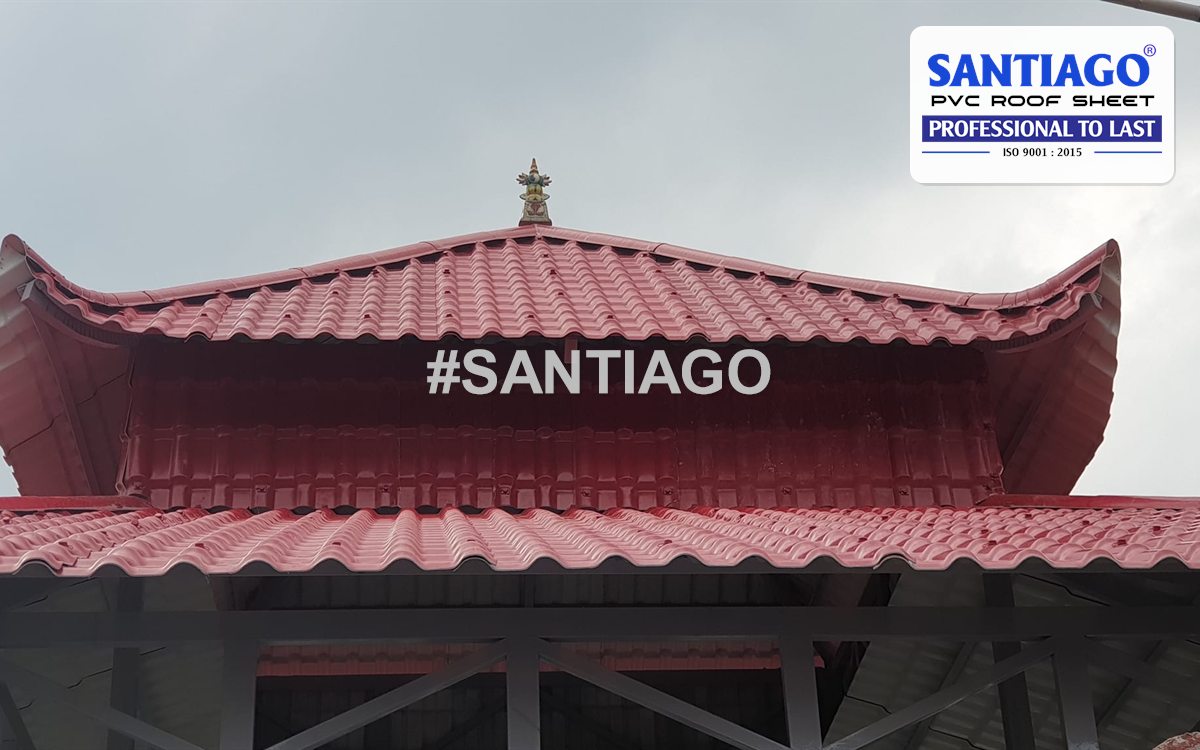
Curved two-tier pagoda-style roof covered with red tile sheets, Vietnam
Why re-roof a wat, sala or village hall with tile sheets?
Many temple buildings and village halls in Laos still have a roof of small clay tiles on a timber frame, or a metal-sheet roof that was put on later over the old frame. Small tiles slip and crack, and in the rainy season each broken tile is a leak. Metal sheet rusts, and under heavy rain it is so loud that a ceremony, a meeting or a class has to stop. Tile sheets keep the tile look that a temple community is used to, and they cover each slope in long pieces 1.05 m wide, cut to the length of that slope, so there are far fewer joints than with small tiles.
In Santiago's tests, rain noise under ASA/PVC is about 80% lower than under metal sheet and the space below is about 6 – 8 °C cooler than under bare metal. For a hall where people sit on the floor for hours, both differences are easy to notice. The sheet contains no metal, so it does not rust.
Is an old timber roof frame strong enough for tile sheets?
A 2.5 mm Santiago tile sheet weighs about 5.4 kg per m² of roof, much lighter than clay or concrete tiles. That light weight is the main reason committees choose tile sheets when the frame is old. Lighter does not mean the frame check can be skipped. Before ordering, have a carpenter go over the rafters and purlins for rot, termite damage and sagging, and replace weak timber first. If the committee wants the new load compared with the old roof covering, a local engineer can work it out from the 5.4 kg per m² figure.
Where do the purlins go on a tiered temple roof?
Each roof plane needs its own purlins under the tile sheets, less than 700 mm apart. For the tile sheet the spacing is 440 mm or 660 mm, so that every purlin sits under the foot of a tile step (the tile step is 219 mm). Battens laid for small clay tiles rarely line up with that step, so plan new purlin lines on each tier. The top purlin goes 15 – 18 cm below the ridge.
Santiago's installation guide covers roof slopes of 20 – 45%. Traditional Lao temple roofs are often steeper than that, especially the upper tier. Measure the rise and the run of each tier. If a tier is steeper than 45%, or if the roof sweeps upward at the eaves, send the drawing and photos to Santiago before ordering, so you know which parts the sheets can cover.
Which accessories does a temple or sala roof need?
| Roof part | Santiago piece | Where it goes |
|---|---|---|
| Main ridge | Ridge cap | Along the top of each tier |
| End of a ridge | Ridge terminal | Gable ends, where a ridge stops |
| Hip line | Diagonal (hip) ridge | Corners of a hip roof or a sala |
| Ridge meets two hips | Three-way piece | Each end of a short ridge on a hip roof |
| Four hips meet at a point | Four-way piece | Top of a square sala or pavilion |
| Eave line | Eave sealing tile | Closes the wave openings at the eave |
| Lower tier meets a wall | Vertical wall flashing | Where a roof runs into a wall above it |
| Screw heads | ASA screw caps | Every screw, in the roof colour |
All pieces come in the same colours as the sheets; red and orange are standard colours, as are dark grey, blue and chocolate. Santiago does not make carved ridge finials, naga boards or other temple ornaments. Plan with the temple's craftsmen how each ornament will be fixed back to the timber frame rather than to the plastic sheet.
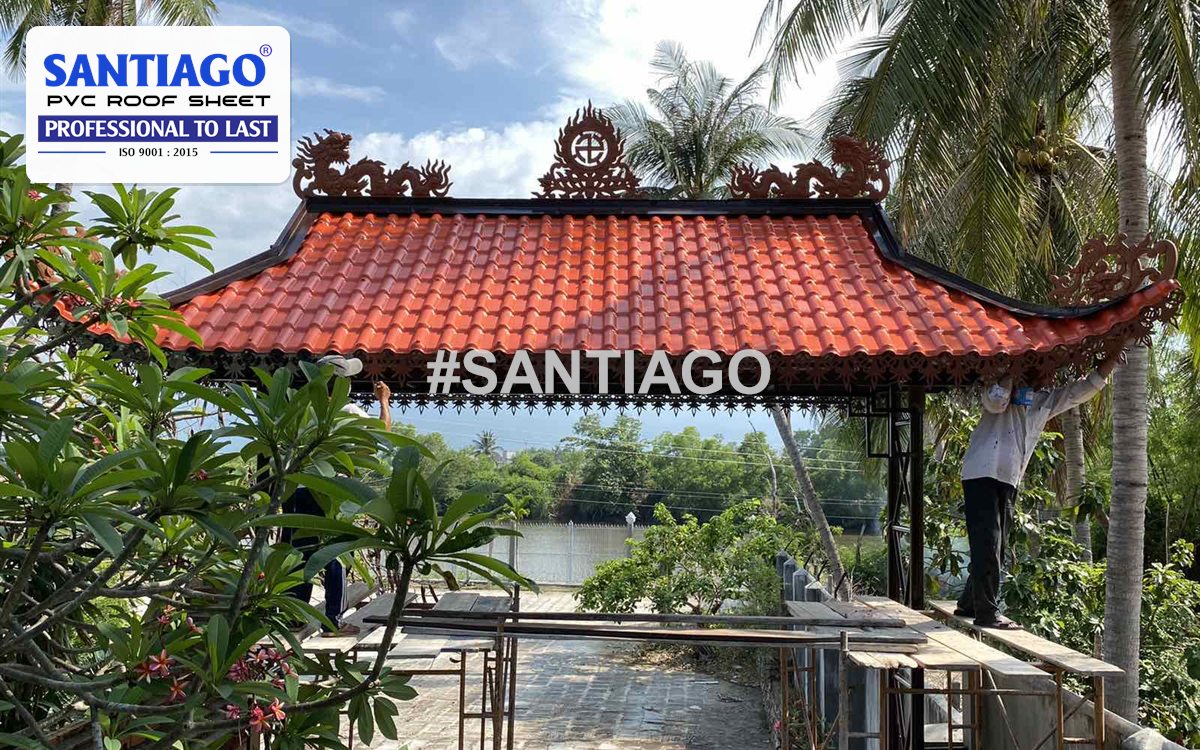
Temple pavilion with a red tile roof and a decorated ridge, Khanh Hoa, Vietnam
Worked example: how many sheets for a two-tier village sala?
Take a village sala with a gable upper roof and a lower tier along both long sides. The figures below are an example; use your own measurements.
- Upper tier: 10 m long, each slope 3.25 m from ridge to eave. 10 m ÷ 0.96 m cover = 10.4, so 11 sheets per side and 22 sheets in all, each 15 tile steps long (3.285 m).
- Lower tier: 14 m long on each long side, slope 2.1 m. 14 m ÷ 0.96 m = 14.6, so 15 sheets per side and 30 in all, each 10 tile steps long (2.19 m).
- Roof area: about 66 m² on the upper tier and 61 m² on the lower tier, about 127 m² in total.
- Weight of the sheets at 2.5 mm: 127 m² × 5.4 kg, about 690 kg.
- Screw sets with ASA caps: 4 – 5 per m², about 510 – 640.
- Accessories: ridge cap along the 10 m ridge, a ridge terminal at each end, eave sealing tile along the eaves and vertical wall flashing where the lower tier meets the wall under the upper tier.
The whole sala takes about 138 m of tile sheet. Santiago checks the list against your drawing and quotes per order in writing.
How does a temple committee in Laos order tile sheets?
Santiago exports by the container. One 40 ft container holds about 5,000 m of sheet and is produced in about 5 days, and colours, profiles and accessories can be mixed in it. A single sala uses only a small part of that, so a temple usually orders through a Lao dealer or a builder who imports, or several projects are grouped into one container. Shipments to Laos travel with a Form D certificate of origin under the ASEAN agreement; the importer's customs broker confirms the duty rate for HS code 3925.90.00.
Free samples help a committee agree on the colour; the buyer pays the courier. Santiago works under ISO 9001:2015 (certificate ICI-23087.D) and sends a quality certificate (CQ) with every lot. It supplies the sheets and accessories and sends installation videos, but does not install. The roofer pre-drills 6 mm holes, uses 70 mm screws through the top of the wave over a purlin, laps one wave sideways and never screws in the valley.
What does a PVC tile roof look like during installation?
Mr Quyen shows a green ASA/PVC sheet in the Santiago factory, then climbs onto a grey tile-profile roof that installers are still screwing down. Near the end he and a colleague walk along a finished grey tile roof next to the gutter.
Santiago uPVC tile roofs on site (Santiago video on YouTube).
Short videos for buyers in Laos
The clips below come from Santiago's own YouTube channel and were filmed at the factory in Vietnam or on Santiago roofs.
What do red tile sheets look like going up onto a roof?
This one-minute short moves from red tile sheets going up onto a house to a flame test on a stack of sheets, then a blue warehouse roof under installation. A flame test is a demonstration, not a fire rating.
Santiago PVC roofing tiles in real conditions (Santiago video on YouTube).
What does a tile sheet look like up close at the factory?
A Santiago worker stands on a white tile sheet on the factory floor and a gas torch is pointed at red and blue sheets beside it. The short ends with the team in front of an export container.
Santiago tile sheets at the factory (Santiago video on YouTube).
What does a sheet look like as it comes off the line?
A 14-second look at the Santiago line, where a long white corrugated sheet comes off the extruder.
A Santiago ASA/PVC sheet on the extrusion line (Santiago video on YouTube).
Santiago – a leading exporter of ASA/PVC roofing from Vietnam
Santiago roofing is produced and loaded into containers at our factory in Vietnam. It has been exported to India since 2023, Thailand since 2024 and the USA since 2025. Every export shipment comes with a commercial invoice, packing list, bill of lading and a certificate of origin (C/O) issued by Vietnam's Ministry of Industry and Trade, which importers use to claim the duty preference of their trade agreement.
| Item | Details |
|---|---|
| HS code | 3925.90.00 (ASA/PVC roofing sheets) |
| Certificate of origin | Form D (ASEAN), Form AI (India), Form AK / VK (Korea), Form AJ / VJ (Japan), Form VC (Chile), CPTPP proof of origin |
| Shipped from | Vietnam, by container |

Certificate of origin Form AI (ASEAN–India) for Santiago ASA/PVC roofing sheets, HS 39259000, certified on 24 September 2026. Buyer details are hidden.
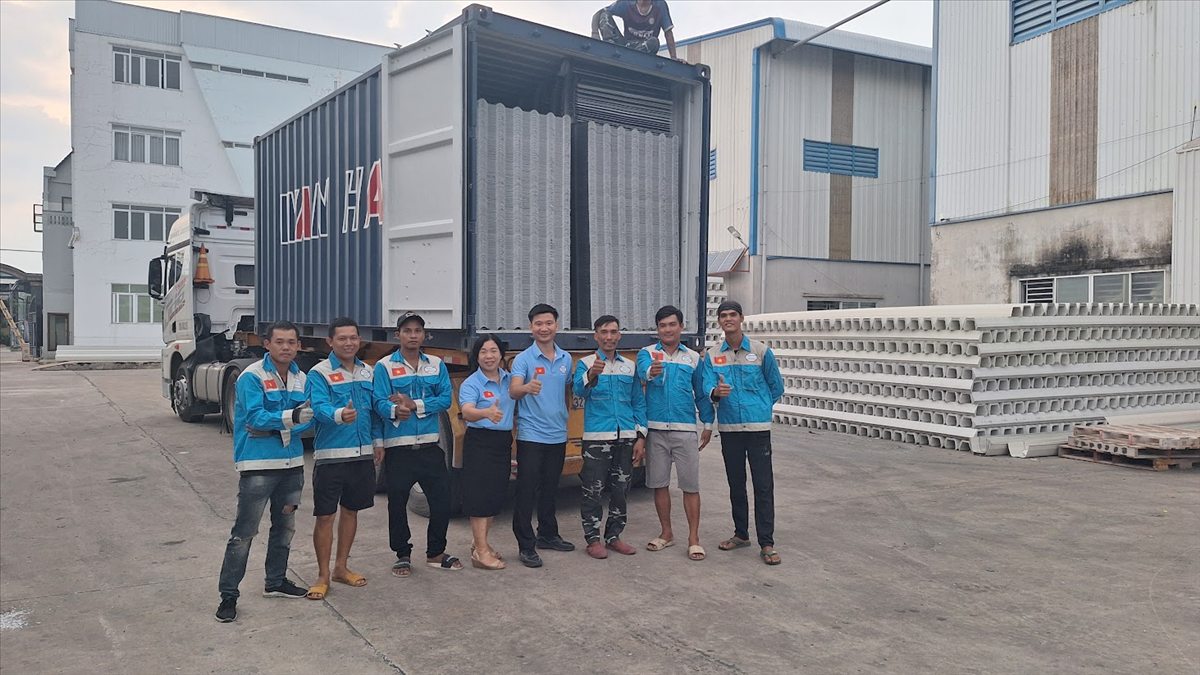
The Santiago team beside a loaded export container at the factory, November 2024
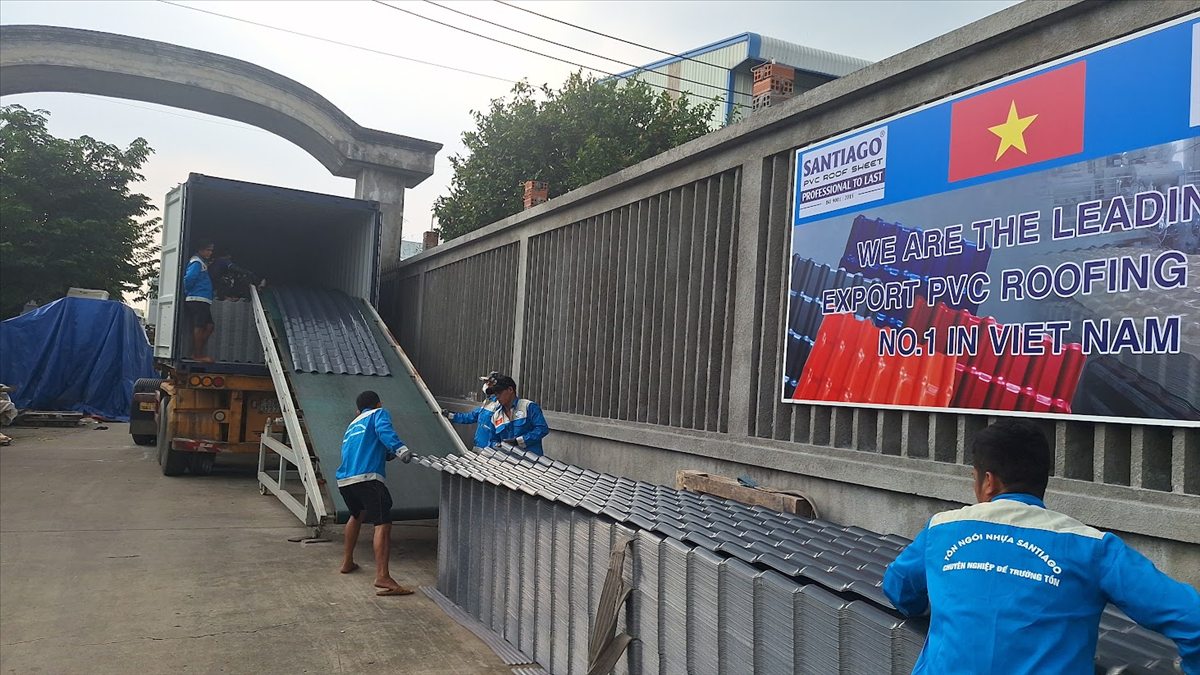
Loading Santiago roof tiles into an export container
Frequently asked questions
Can PVC tile sheets be used on a temple roof in Laos?
Yes, on roof planes with a slope of 20 – 45%. Santiago ASA/PVC tile sheets weigh about 5.4 kg per m² and come with ridge cap, hip ridge, ridge terminal, three-way and four-way pieces in the same colour.
Are PVC roof tiles light enough for an old timber frame?
A 2.5 mm Santiago tile sheet weighs about 5.4 kg per m² of roof, much lighter than clay tiles. Rotten or termite-damaged timber should still be replaced before re-roofing.
What piece closes the top of a square sala roof?
The four-way piece, where the four hip lines meet. The hip lines themselves are covered with the diagonal (hip) ridge.
What if a temple roof tier is steeper than 45%?
Send the drawing and photos to Santiago before ordering. Its installation guide covers slopes of 20 – 45%.
Which certificate of origin is used for Laos?
Form D, under the ASEAN agreement. The importer's customs broker confirms the duty rate for HS code 3925.90.00.
Read more
- Spanish-style plastic roof tiles for houses and resorts in Laos
- Pyramid roofs and gazebos: which tile accessories to order
- How roofing from Vietnam reaches Laos
- ASA/PVC roofing tile
ສະບັບພາສາລາວ
ວັດ, ສາລາ ແລະ ຫໍປະຊຸມບ້ານ ໃນລາວ ສາມາດປ່ຽນມາມຸງແຜ່ນກະເບື້ອງມຸງຫຼັງຄາ PVC ແບບລອນກະເບື້ອງ ຂອງ Santiago ໄດ້. ແຜ່ນໜາ 2.5 ມມ. ໜັກປະມານ 5.4 ກິໂລ ຕໍ່ຕາແມັດຂອງຫຼັງຄາ, ເບົາກວ່າກະເບື້ອງດິນຈີ່ຫຼາຍ ຈຶ່ງເໝາະກັບໂຄງໄມ້ເກົ່າ. ຄອບສັນ, ຄອບສັນມຸມ, ຫົວປິດສັນ, ສາມທາງ ແລະ ສີ່ທາງ ມີສີດຽວກັນກັບແຜ່ນ. ຄວາມຊັນທີ່ແນະນຳແມ່ນ 20 – 45%, ສິນຄ້າສົ່ງຈາກຫວຽດນາມພ້ອມ Form D.
ເປັນຫຍັງວັດ ແລະ ສາລາ ຈຶ່ງປ່ຽນມາໃຊ້ກະເບື້ອງມຸງຫຼັງຄາ PVC?
ຫຼັງຄາວັດ ແລະ ສາລາບ້ານຫຼາຍແຫ່ງ ຍັງເປັນກະເບື້ອງດິນແຜ່ນນ້ອຍເທິງໂຄງໄມ້, ຫຼື ເປັນສັງກະສີທີ່ມຸງເພີ່ມພາຍຫຼັງ. ກະເບື້ອງແຜ່ນນ້ອຍເລື່ອນ ແລະ ແຕກງ່າຍ, ແຕກແຜ່ນດຽວກໍ່ຮົ່ວໃນລະດູຝົນ. ສັງກະສີເປັນຂີ້ໝ້ຽງ ແລະ ສຽງດັງຫຼາຍເວລາຝົນຕົກ ໃນຂະນະທີ່ຍາດໂຍມ ຫຼື ຊາວບ້ານມາຊຸມນຸມກັນ. ແຜ່ນ ASA/PVC ບໍ່ມີເຫຼັກ ຈຶ່ງບໍ່ເປັນຂີ້ໝ້ຽງ. ຜົນທົດສອບຂອງ Santiago ສະແດງວ່າ ສຽງຝົນເບົາກວ່າຫຼັງຄາເຫຼັກປະມານ 80% ແລະ ໃຕ້ຫຼັງຄາເຢັນກວ່າປະມານ 6 – 8 °C. ແຜ່ນກວ້າງ 1.05 ມ. ຕັດຍາວຕາມແຕ່ລະດ້ານ ຈຶ່ງມີຮອຍຕໍ່ໜ້ອຍກວ່າກະເບື້ອງແຜ່ນນ້ອຍຫຼາຍ.
ໂຄງໄມ້ເກົ່າ ແລະ ຄວາມຊັນຂອງແຕ່ລະຊັ້ນ
ກ່ອນສັ່ງ ໃຫ້ຊ່າງໄມ້ກວດໂຄງຫຼັງຄາ: ໄມ້ທີ່ເປື່ອຍ, ປວກກິນ ຫຼື ແອ່ນລົງ ຕ້ອງປ່ຽນກ່ອນ. ໄມ້ແປທີ່ວາງໄວ້ສຳລັບກະເບື້ອງແຜ່ນນ້ອຍ ມັກບໍ່ກົງກັບໄລຍະລອນ 219 ມມ. ຈຶ່ງຕ້ອງວາງແປໃໝ່ຫ່າງ 440 ຫຼື 660 ມມ. ໃຫ້ແປທຸກເສັ້ນຢູ່ໃຕ້ຕີນລອນ, ແປເທິງສຸດຫ່າງຈາກສັນ 15 – 18 ຊມ.
ຄູ່ມືການມຸງຂອງ Santiago ກຳນົດຄວາມຊັນ 20 – 45%. ຫຼັງຄາວັດລາວຫຼາຍຫຼັງຊັນກວ່ານັ້ນ ໂດຍສະເພາະຊັ້ນເທິງ. ໃຫ້ວັດຄວາມສູງ ແລະ ຄວາມຍາວລາດຂອງແຕ່ລະຊັ້ນ ແລ້ວສົ່ງແບບ ແລະ ຮູບຖ່າຍໃຫ້ Santiago ກວດກ່ອນສັ່ງ. ຫຼັງຄາທີ່ໂຄ້ງ ຫຼື ງ່ອນຂຶ້ນຢູ່ຊາຍຄາ ກໍ່ໃຫ້ສົ່ງແບບມາກ່ອນເຊັ່ນກັນ.
| ສ່ວນຂອງຫຼັງຄາ | ອຸປະກອນ Santiago |
|---|---|
| ສັນຫຼັງຄາ | ຄອບສັນ |
| ປາຍສັນດ້ານໜ້າຈົ່ວ | ຫົວປິດສັນ |
| ສັນມຸມ (hip) | ຄອບສັນມຸມ |
| ສັນພົບກັບສັນມຸມ 2 ເສັ້ນ | ຊິ້ນສາມທາງ |
| ຍອດສາລາ ທີ່ສັນມຸມທັງສີ່ມາພົບກັນ | ຊິ້ນສີ່ທາງ |
| ຊາຍຄາ | ກະເບື້ອງປິດຊາຍຄາ |
| ຫຼັງຄາຊັ້ນລຸ່ມຕິດຝາ | ຄອບຕິດຝາ |
| ຫົວສະກູ | ຝາປິດ ASA ສີດຽວກັນ |
Santiago ບໍ່ໄດ້ຜະລິດຊໍ່ຟ້າ ແລະ ລວດລາຍປະດັບຂອງວັດ. ໃຫ້ຕົກລົງກັບຊ່າງຂອງວັດວ່າ ຈະຍຶດລວດລາຍແຕ່ລະອັນຄືນໃສ່ໂຄງໄມ້ ບໍ່ແມ່ນຍຶດໃສ່ແຜ່ນພາດສະຕິກ.
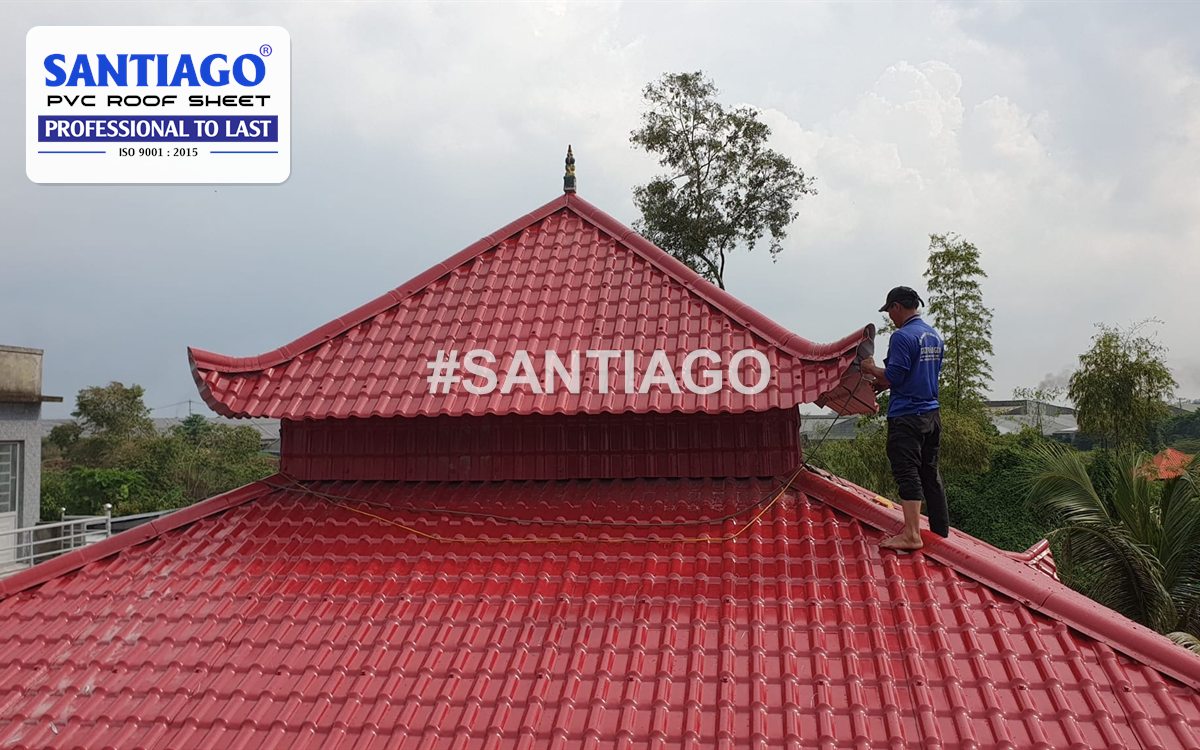
ຊ່າງກຳລັງມຸງແຜ່ນກະເບື້ອງສີແດງ ເທິງຫຼັງຄາສອງຊັ້ນ, ຫວຽດນາມ
ຕົວຢ່າງ: ສາລາບ້ານຫຼັງຄາສອງຊັ້ນ ໃຊ້ຈັກແຜ່ນ?
ຊັ້ນເທິງຍາວ 10 ມ., ລາດຂ້າງລະ 3.25 ມ.: ຂ້າງລະ 11 ແຜ່ນ, ລວມ 22 ແຜ່ນ, ຍາວແຜ່ນລະ 3.285 ມ. (15 ລອນ). ຊັ້ນລຸ່ມສອງຂ້າງ ຍາວ 14 ມ., ລາດ 2.1 ມ.: ຂ້າງລະ 15 ແຜ່ນ, ລວມ 30 ແຜ່ນ, ຍາວແຜ່ນລະ 2.19 ມ. (10 ລອນ). ເນື້ອທີ່ຫຼັງຄາປະມານ 127 ຕາແມັດ, ນ້ຳໜັກແຜ່ນປະມານ 690 ກິໂລ, ສະກູພ້ອມຝາປິດ 510 – 640 ຊຸດ (4 – 5 ຊຸດຕໍ່ຕາແມັດ). ລວມທັງໝົດໃຊ້ແຜ່ນປະມານ 138 ແມັດ.
ສັ່ງຊື້ ແລະ ນຳເຂົ້າມາລາວແນວໃດ?
Santiago ສົ່ງອອກເປັນຕູ້: ຕູ້ 40 ຟຸດ ປະມານ 5,000 ແມັດ, ຜະລິດປະມານ 5 ມື້, ປະສົມສີ, ແບບລອນ ແລະ ອຸປະກອນໃນຕູ້ດຽວໄດ້. ສາລາຫຼັງດຽວໃຊ້ແຜ່ນໜ້ອຍ ຈຶ່ງມັກສັ່ງຜ່ານຕົວແທນຈຳໜ່າຍ ຫຼື ຜູ້ຮັບເໝົາທີ່ນຳເຂົ້າໃນລາວ. ສິນຄ້າໄປລາວມີໃບຢັ້ງຢືນແຫຼ່ງກຳເນີດສິນຄ້າ Form D ແລະ ໃບຢັ້ງຢືນຄຸນນະພາບ (CQ) ທຸກລັອດ. ລາຄາແຈ້ງເປັນລາຍລັກອັກສອນຕາມແຕ່ລະອໍເດີ. ຕົວຢ່າງສີສົ່ງໃຫ້ຟຣີ, ຜູ້ຊື້ຈ່າຍຄ່າສົ່ງ. Santiago ສົ່ງແຜ່ນ, ອຸປະກອນ ແລະ ວິດີໂອການມຸງ ແຕ່ບໍ່ຮັບມຸງເອງ.

ສາລາເປີດໂລ່ງ ມຸງກະເບື້ອງສີຟ້າ, ແຂວງ Binh Phuoc, ຫວຽດນາມ
ຄຳຖາມທີ່ພົບເລື້ອຍ
ຫຼັງຄາວັດ ໃຊ້ແຜ່ນກະເບື້ອງ PVC ໄດ້ບໍ?
ໄດ້ ສຳລັບຫຼັງຄາທີ່ຊັນ 20 – 45%. ແຜ່ນໜັກປະມານ 5.4 ກິໂລຕໍ່ຕາແມັດ ແລະ ມີຄອບສັນ, ຄອບສັນມຸມ, ຫົວປິດສັນ, ສາມທາງ, ສີ່ທາງ ສີດຽວກັນ. ຊັ້ນທີ່ຊັນກວ່າ 45% ໃຫ້ສົ່ງແບບມາກວດກ່ອນ.
ຍອດສາລາສີ່ຫຼ່ຽມ ໃຊ້ອຸປະກອນຫຍັງປິດ?
ໃຊ້ຊິ້ນສີ່ທາງ ຢູ່ຈຸດທີ່ສັນມຸມທັງສີ່ມາພົບກັນ ແລະ ໃຊ້ຄອບສັນມຸມປິດແຕ່ລະມຸມ.
ນຳເຂົ້າກະເບື້ອງມຸງຫຼັງຄາ PVC ມາລາວ ໃຊ້ເອກະສານຫຍັງ?
ໃຊ້ໃບຢັ້ງຢືນແຫຼ່ງກຳເນີດສິນຄ້າ Form D ຕາມຂໍ້ຕົກລົງອາຊຽນ ພ້ອມໃບຢັ້ງຢືນຄຸນນະພາບ (CQ) ທຸກລັອດ. ອັດຕາພາສີ ໃຫ້ກວດກັບຕົວແທນພາສີ, ລະຫັດ HS 3925.90.00.
Sources for the figures in this article
- Profiles, 2.5–3.0 mm thickness and 10-year warranty: Santiago ASA/PVC product specification.
- About 6–8 °C cooler than bare metal sheet and about 80% less rain noise: Santiago's own comparisons on finished roofs in Vietnam.
- HS code 3925.90.00: Harmonized System Chapter 39 (builders' ware of plastics), as applied in Vietnam's export tariff.
- Certificates of origin (Form D, AI, AK/VK, AJ/VJ, VC, CPTPP): issued by Vietnam's Ministry of Industry and Trade under the country's free trade agreements.
- Minimum order of one 40 ft container (about 5,000 m) and about 5 days for production and loading: Santiago export desk, October 2026.
Updated 03/11/2026. Santiago Import Export Co., Ltd, Vietnam. WhatsApp +84 935 391 495 (Mr. Quyen), hotline +84 965 437 316 (Mrs. Ly), email salessantiagoroofing@gmail.com.


