


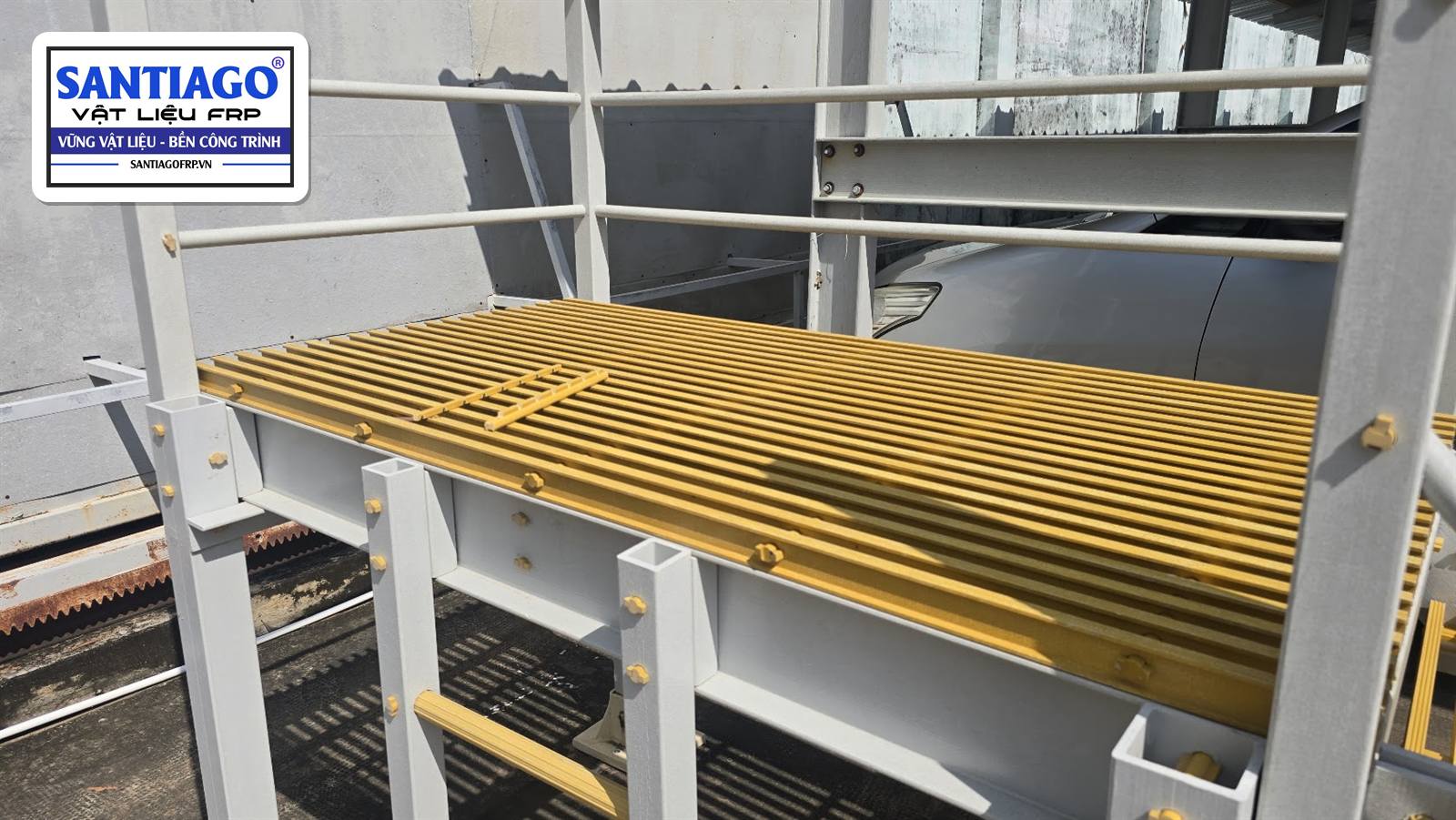
FRP grating is an open-mesh floor panel of glass fibre reinforced resin with a gritted anti-slip top. It replaces steel grating on walkways, working platforms and trench covers where steel rusts fast: chemical plants, wastewater plants, plating shops, ports and coastal sites. It does not rust or conduct electricity.
Why replace steel grating?
Steel grating over wastewater tanks, chemical trenches or near the sea rusts at the bars and edges until it can give way under foot. FRP has no metal to rust and can be laid next to electrical equipment because it does not conduct. One or two people can lift an FRP trench cover. The open mesh lets water and chemicals drain, and the grit keeps the surface slip-resistant when wet.
How is the thickness chosen?
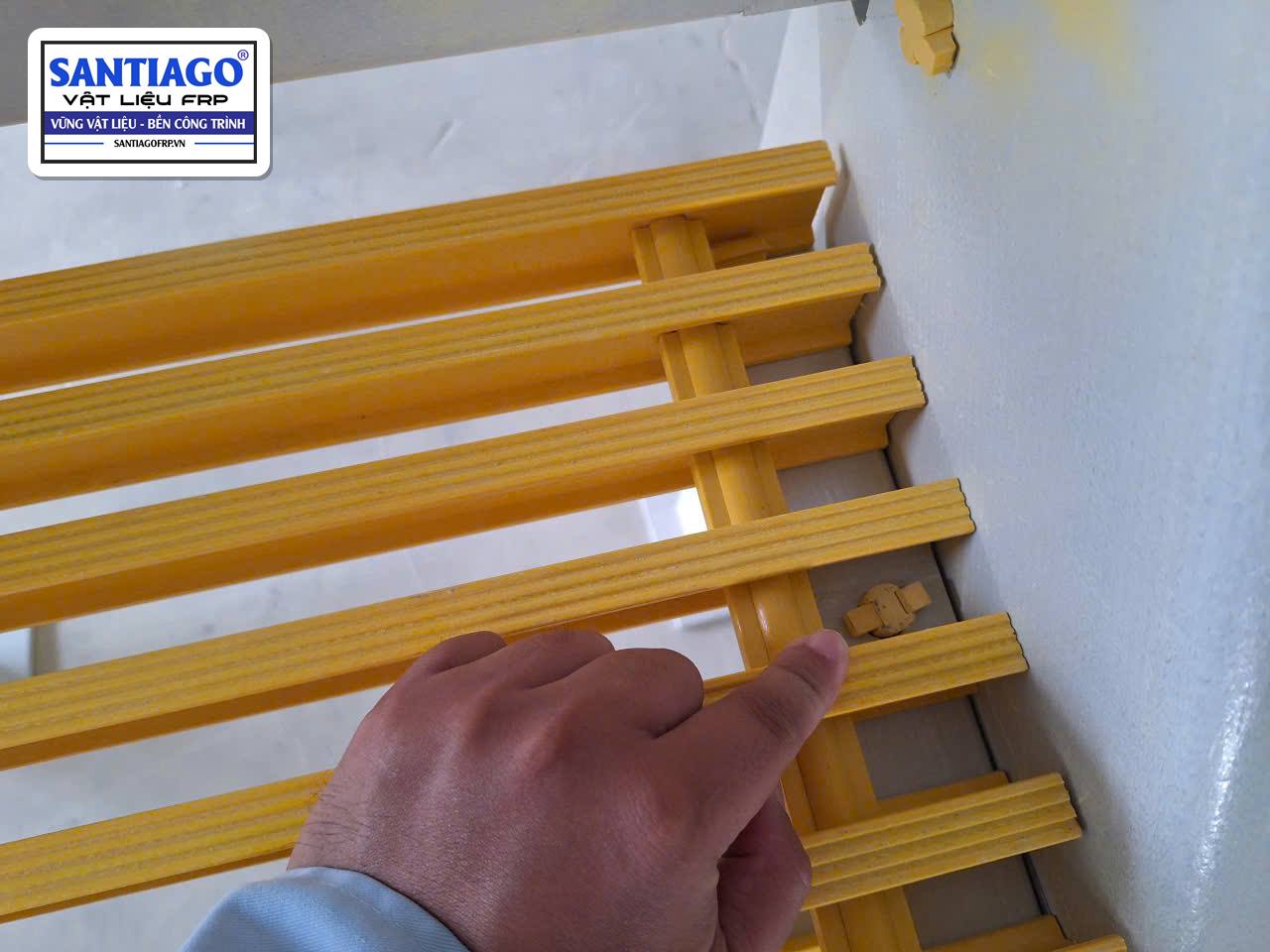
By the distance between the support beams and by what crosses the floor: people only, trolleys or forklifts. FRP is less stiff than steel, so for the same span and load an FRP grating is usually thicker than a steel one.
What do I send for a quotation?
- The floor plan or panel sizes.
- The spacing of the support beams.
- The traffic: pedestrians, trolleys or forklifts.
- The chemicals present in the area.
Santiago cuts the panels to your plan and advises the thickness. For access to the platform, see FRP stairs.
Frequently asked questions
What is FRP grating?
An open-mesh floor panel of glass fibre reinforced resin with a gritted anti-slip surface. It does not rust or conduct electricity.
Where is FRP grating used?
Walkways and platforms over tanks, trench and manhole covers, plating shops, jetties and floors around electrical equipment.
What information is needed for a quotation?
The floor plan or sizes, the beam spacing, the type of traffic and the chemicals in the area.
Contact: Santiago Import Export Co., Ltd, Vietnam. WhatsApp +84 935 391 495 (Mr. Quyen), hotline +84 965 437 316 (Mrs. Ly), email salessantiagoroofing@gmail.com.
Updated October 2026.


