


Mr Quyen - Santiago. Posted 03/11/2026
A garden gazebo (東屋) or small pavilion can get a tiled look from Santiago ASA/PVC tile sheet, which weighs about 5.4 kg per m² of roof; ceramic, clay and cement tiles are much heavier. A pyramid roof needs a four-way piece at the peak, hip ridge along each hip and a ridge terminal at the foot of each hip, at a slope of 20 – 45%. A 3.0 m × 3.0 m gazebo roof at 40% has about 9.7 m² of sheet, roughly 52 kg.

Garden gazebo with a blue tile roof among plants, Vietnam
What roof suits a garden gazebo or azumaya?
A gazebo (東屋, also written 四阿) has open sides and usually no ceiling, so whoever sits in it is right under the roof, and the roof is the part you see from the house. Ceramic tile gives the look but puts a lot of weight on four slim posts. Thin metal sheet is light, yet hot in summer and loud in rain.
Santiago's ASA/PVC tile sheet shows rows of curved tiles, one every 219 mm, and weighs about 5.4 kg per m² of roof at 2.5 mm. In Santiago's tests the space under it stays 6 – 8 °C cooler than under bare metal sheet and rain noise is about 80% lower. There is no metal in it, so a gazebo beside a pond or near the sea has nothing in the roof that can rust. The sheet is made of four co-extruded layers with no glue, with an ASA top layer over virgin PVC.
How is a pyramid roof put together with tile sheets?
Most gazebos have a pyramid roof (宝形造り): four triangular faces rising to one point, with a hip running from each corner up to the peak. Some have a hip roof (寄棟) with a short ridge at the top instead. Each face is covered with tile sheets laid from the eave upward and cut along the hip line on site. The hips are then covered with hip ridge, the point where they meet with a four-way piece, and the lower end of each hip with a ridge terminal. A hip roof uses a ridge cap along its short ridge and a three-way piece at each end of it instead of the four-way piece.
| Roof shape | At the top | On the hips | At the eaves |
|---|---|---|---|
| Pyramid roof (宝形) | 1 four-way piece | Hip ridge on 4 hips, 4 ridge terminals | Eave sealing tile all round |
| Hip roof (寄棟) | Ridge cap, 2 three-way pieces | Hip ridge on 4 hips, 4 ridge terminals | Eave sealing tile all round |
| Gable roof (切妻) | Ridge cap, 2 ridge terminals | None | Eave sealing tile on the 2 eaves |
All of these pieces come in the same colour as the sheet. Our article on pyramid roofs on gazebos and kiosks shows how the four-way piece closes the peak.
What slope should a gazebo roof have?
Keep the roof between 20% and 45%, which is a 2-sun to 4.5-sun pitch (2寸〜4.5寸勾配) in Japanese terms. That is Santiago's installation range for the tile sheet, and the warranty assumes it. Within the range the choice is about looks and height: a steeper pyramid shows more of the tile rows from the ground, and a lower one keeps the gazebo shorter in a small garden.
Purlins run parallel to the eaves, less than 700 mm apart: 440 or 660 mm for the tile sheet, so that one purlin sits under the foot of a tile step. On a pyramid roof the purlins get shorter towards the peak, where they meet the hip rafters.
Worked example: how much sheet for a 3.0 m × 3.0 m gazebo at 40%?
Take an azumaya with posts 2.4 m apart each way and a 0.3 m eave overhang on all sides, so the roof measures 3.0 m × 3.0 m in plan, with a pyramid roof at 40% (4-sun pitch). Each face is a triangle with a 3.0 m eave. Four sheets cover each eave (3.84 m of cover), with the joint between the two middle sheets on the centre line of the face. The middle sheets run almost to the peak; the outer ones stop where the hip crosses them.
| Step | Working | Result |
|---|---|---|
| Rise | 1.5 m half-width × 40% | 0.6 m |
| Slope length up the centre of a face | √(1.5² + 0.6²) | 1.616 m |
| Hip length | √(1.5² + 1.5² + 0.6²) | 2.20 m |
| Middle sheets | 1.616 m ÷ 0.219 m = 7.4, round up to 8 steps | 2 per face × 1.752 m |
| Outer sheets | Face length 0.96 m from the centre: 1.616 × (1 − 0.96 ÷ 1.5) = 0.58 m, round up to 3 steps | 2 per face × 0.657 m |
| Sheets for the roof | 4 faces | 8 × 1.752 m + 8 × 0.657 m, about 19.3 running metres |
| Roof area | 4 × ½ × 3.0 m × 1.616 m | about 9.7 m² |
| Screw sets with ASA caps | 9.7 m² × 4 – 5 per m² | about 39 – 49 |
| Hip ridge | 4 hips × 2.20 m | 8.8 m |
| Peak and hip feet | 1 peak, 4 hip feet | 1 four-way piece, 4 ridge terminals |
| Eave sealing tile | 4 × 3.0 m | 12 m |
| Sheet weight | 9.7 m² × 5.4 kg | about 52 kg |
The cuts along the hips leave triangular offcuts, so the order has more running metres than the 9.7 m² roof would suggest. Check the lengths against your own frame before ordering: if the post spacing or the overhang changes, the outer sheet lengths change too.
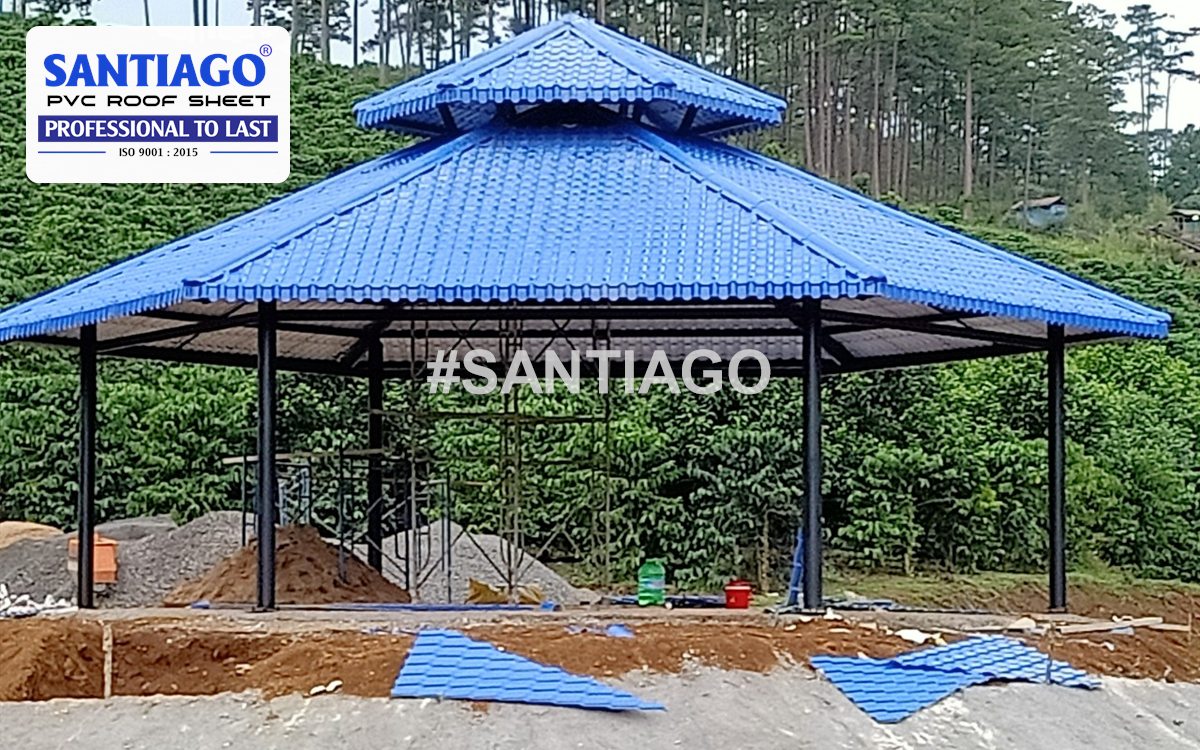
Two-tier open pavilion with a blue tile roof on a steel frame, Vietnam
What does a light roof change for the gazebo frame?
In the example the sheet weighs about 52 kg for the whole roof, roughly 13 kg per post on four posts. Ceramic, clay and cement tiles are much heavier, and a tiled azumaya needs posts and beams sized for that weight.
A light roof has its own point to watch, which is wind. With open sides, wind can get under a gazebo roof and push it upward, so the posts must be anchored firmly and every sheet fixed at 4 – 5 screw sets per m² through the top of the wave into a purlin, never into the valley. In snowy regions the snow on the roof can weigh far more than the sheet. Your builder (工務店) sizes the posts, beams and footings for local wind and snow; Santiago does not publish a snow-load rating for the sheet.
Which colour suits a Japanese garden, and will it fade?
Five colours are standard: dark grey, red, blue, orange and chocolate. Green, white and purple are made to order. If the gazebo stands near a house with a grey tile roof, hold a dark grey sample against that roof in daylight before you choose, since screens and printed charts do not show roof colours reliably. Samples are free; the buyer pays the courier.
The colour sits in the ASA top layer, which showed no colour change after 2,000 hours of artificial UV. The colour is rated for 30 years, real roofs last 25 – 30 years, and the warranty is 10 years for sheets 2.5 mm and thicker installed as Santiago recommends.
Can tile sheets make a tiled roof lighter (瓦 軽量化)?
In Japan, 瓦 軽量化 (making a tiled roof lighter) is usually discussed for houses, often with earthquakes in mind. This article does not give advice on re-roofing a house. Whether and how to lighten a house roof is a structural decision for an architect (建築士) or builder who has looked at the whole building, and Santiago makes no earthquake or fire rating claim for its sheet in Japan.
Where the tile sheet fits is the small outbuilding: a gazebo, a covered pergola, a shed or a bike shelter that should look tiled without the weight of tile on a slim frame. Covering an open pergola turns it into a roofed structure, so it then needs purlins less than 700 mm apart and a slope of at least 20%.
Which rules apply, and how do you order from Vietnam?
Under the Building Standards Act (建築基準法), a gazebo may need a building confirmation depending on its size and location, and in fire-prevention districts (防火地域・準防火地域) roofing materials can be restricted. Check with your builder or the local building office before you order.
Santiago supplies sheets and accessories from Vietnam and sends installation videos; it does not install. The minimum export order is one 40 ft container, about 5,000 m with colours, profiles and accessories mixed, so a single gazebo is bought through a builder or dealer in Japan who imports by the container. The HS code is 3925.90.00. The Japan–Vietnam EPA, AJCEP and CPTPP may give a lower duty rate with proof of origin; check with your customs broker (通関業者). Shipping terms to Tokyo, Yokohama, Osaka or Kobe are quoted per order in writing, and every lot comes with a quality certificate (CQ) from a factory working under ISO 9001:2015 certificate ICI-23087.D.
How do tile sheets look on real roofs in sun and rain?
Red ASA/PVC tile sheets are carried up to a house, a flame is put to a stack of sheets, and the short ends on a blue warehouse roof under installation and grey sheets on the factory roller line. A flame test is a demonstration, not a fire rating.
Santiago PVC roofing tiles in real conditions (Santiago video on YouTube).
Short videos for garden gazebos in Japan
Three more English shorts from the Santiago YouTube channel. Each one is about a minute or less.
What ridge pieces finish a pyramid gazebo roof?
The camera passes red ridge pieces and stacked red tile sheets in the Santiago warehouse, the stock that goes out on export and OEM orders. The short runs 19 seconds.
Red ridge caps and tile sheets in the Santiago warehouse (Santiago video on YouTube).
What does a tile sheet look like up close?
Filmed inside the Santiago factory: a worker steps onto a white tile sheet, red and blue sheets get a torch test, and the last scene is the team beside an export container.
Santiago tile sheets at the factory (Santiago video on YouTube).
How does a tile sheet compare with metal and clay?
Mr Quyen holds a white tile sheet in the Santiago factory and explains in English, with captions, why bare metal roofs are hot, noisy in rain and costly to repair. The short then shows a red tile roof on a house and a finished grey tile roof beside the gutter.
Heat and rain noise: Santiago ASA/uPVC roofing explained (Santiago video on YouTube).
Santiago – a leading exporter of ASA/PVC roofing from Vietnam
Santiago roofing is produced and loaded into containers at our factory in Vietnam. It has been exported to India since 2023, Thailand since 2024 and the USA since 2025. Every export shipment comes with a commercial invoice, packing list, bill of lading and a certificate of origin (C/O) issued by Vietnam's Ministry of Industry and Trade, which importers use to claim the duty preference of their trade agreement.
| Item | Details |
|---|---|
| HS code | 3925.90.00 (ASA/PVC roofing sheets) |
| Certificate of origin | Form D (ASEAN), Form AI (India), Form AK / VK (Korea), Form AJ / VJ (Japan), Form VC (Chile), CPTPP proof of origin |
| Shipped from | Vietnam, by container |
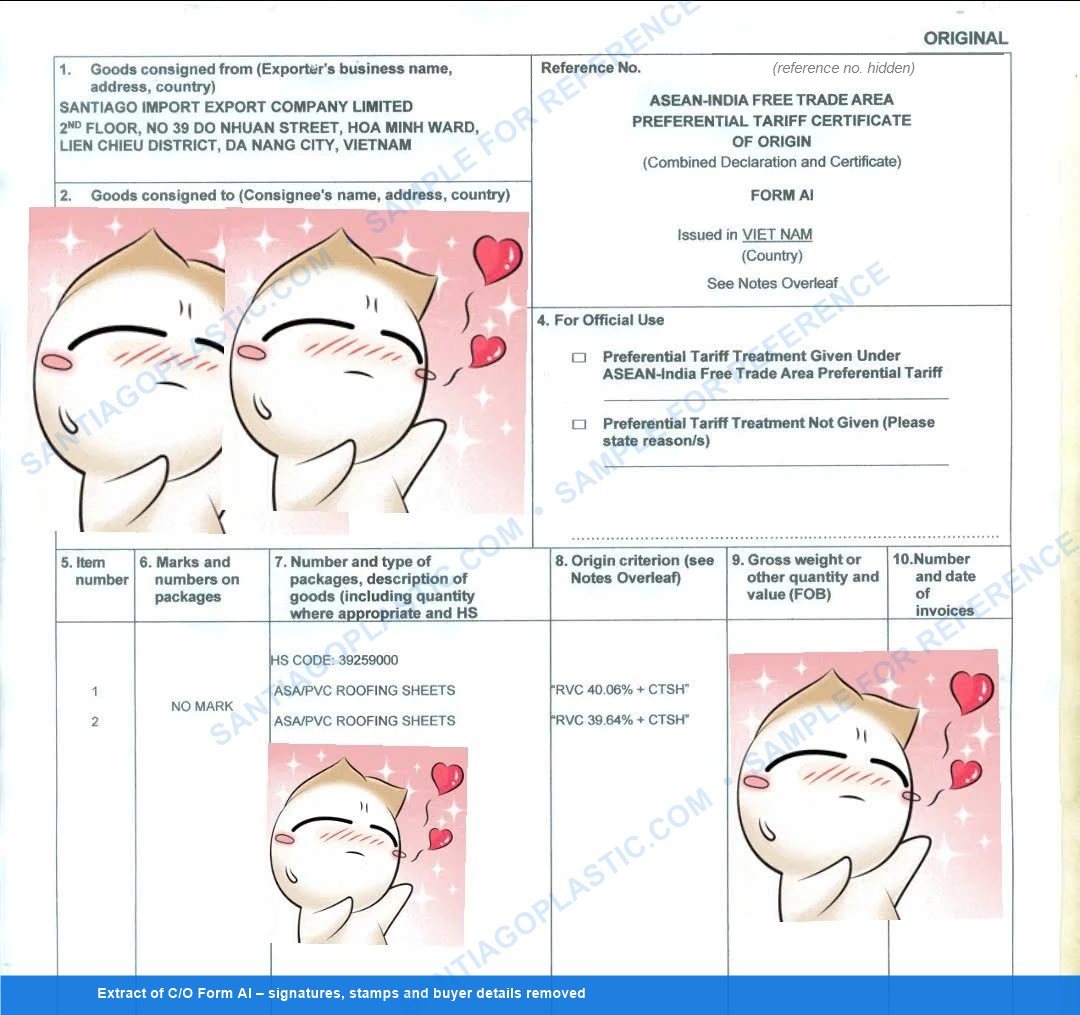
Certificate of origin Form AI (ASEAN–India) for Santiago ASA/PVC roofing sheets, HS 39259000, certified on 24 September 2026. Buyer details are hidden.
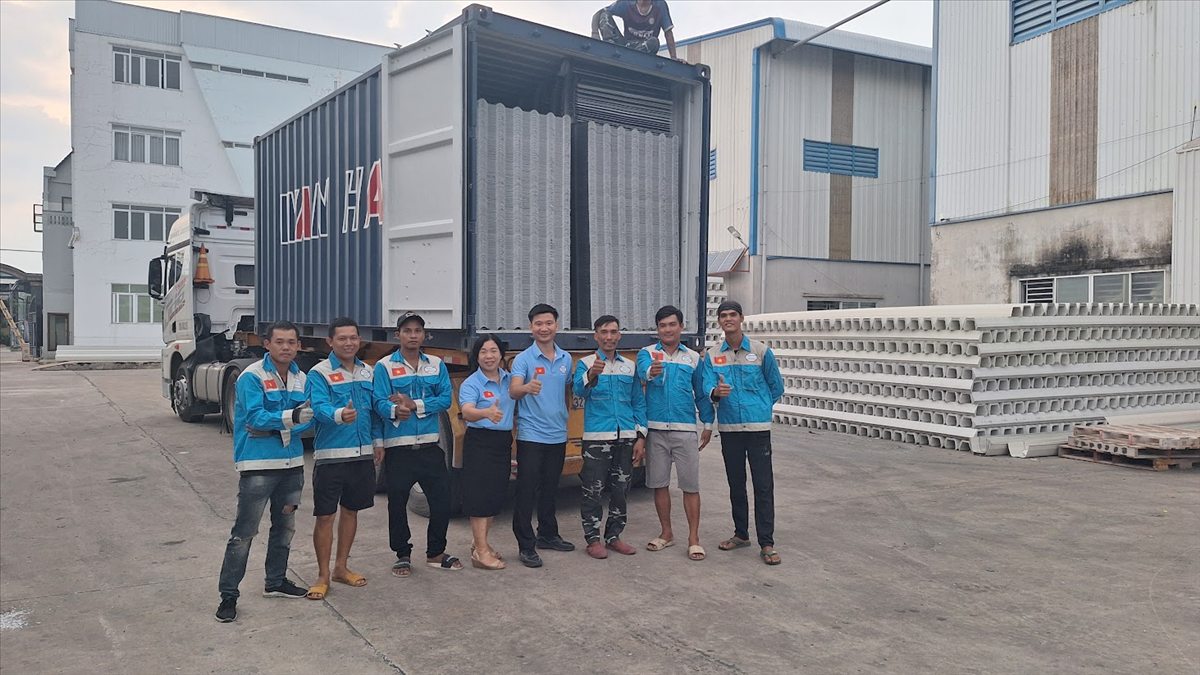
The Santiago team beside a loaded export container at the factory, November 2024
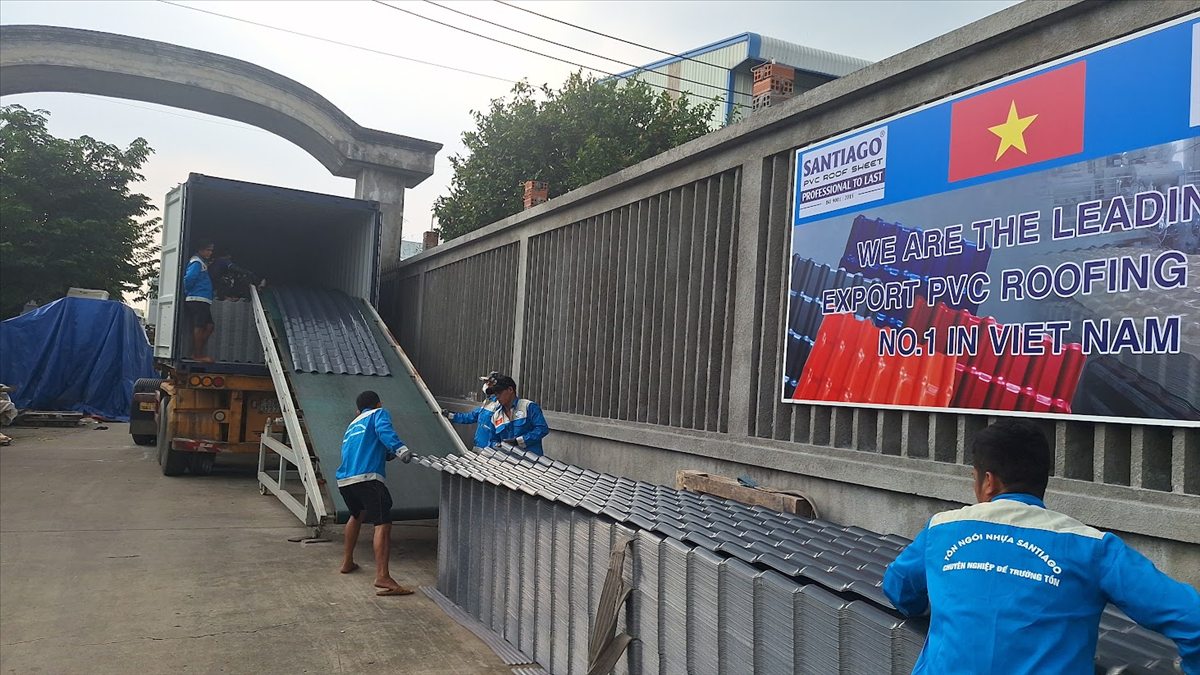
Loading Santiago roof tiles into an export container
Frequently asked questions
What slope should a gazebo roof have?
Between 20% and 45%, which is a 2-sun to 4.5-sun pitch. The 3.0 m × 3.0 m pyramid roof in this article uses 40% (4-sun pitch), which gives a rise of 0.6 m.
Which pieces does a pyramid gazebo roof need?
A four-way piece at the peak, hip ridge along the four hips, a ridge terminal at the foot of each hip and eave sealing tile along the eaves, all in the colour of the sheet.
How heavy is an ASA/PVC tile sheet roof on a gazebo?
The sheet weighs about 5.4 kg per m² of roof at 2.5 mm. A 3.0 m × 3.0 m gazebo roof at 40% has about 9.7 m² of sheet, roughly 52 kg. Ceramic, clay and cement tiles are much heavier.
Can I use tile sheets to make my house roof lighter?
Only on the advice of an architect or builder who has checked the whole building. This article covers gazebos and small outbuildings, and Santiago makes no earthquake or fire rating claim for the sheet in Japan.
How much material does a 3 m × 3 m gazebo roof need?
At 40% with a pyramid roof: 8 sheets of 1.752 m and 8 of 0.657 m (about 19.3 running metres), 8.8 m of hip ridge, 1 four-way piece, 4 ridge terminals, 12 m of eave sealing tile and about 39 – 49 screw sets.
Read more
- Synthetic resin roof tile: sizes and accessories (Japanese)
- Pyramid roofs on gazebos and kiosks
- PVC roofing sheet colours
- Ordering roof tile accessories: checklist and example
- ASA/PVC roof tile sheet
日本語版
庭の東屋(四阿)や小さなあずまやの屋根は、SantiagoのASA/PVC瓦形状屋根材で瓦屋根の見た目にできます。重さは屋根1m²あたり約5.4kgで、陶器瓦・粘土瓦やセメント瓦よりはるかに軽い屋根材です。宝形造りなら頂部に四方、各隅棟に隅棟役物、隅棟の下端に棟端を使い、勾配は20〜45%(2寸〜4.5寸勾配)にします。3.0m×3.0m、4寸勾配の東屋で屋根材は約9.7m²、約52kgです。
東屋の屋根材は何がいい?
東屋は壁がなく、天井もないことが多いので、座る人のすぐ上が屋根です。母屋から眺めたときに目に入るのも屋根です。瓦屋根は見た目がよい一方、細い4本の柱に大きな重さがかかります。薄い金属板は軽いものの、夏は熱く、雨音も大きくなります。
ASA/PVC瓦形状屋根材は219mmごとに瓦の段が並び、厚さ2.5mmで屋根1m²あたり約5.4kgです。Santiagoの試験では、屋根下の温度がむき出しの金属板より6〜8℃低く、雨音は約80%小さくなりました。金属を含まないので、池のそばや海の近くの東屋でも屋根が錆びることはありません。

庭に並ぶ赤い瓦形状屋根の宝形造りの東屋2棟、ベトナム
東屋の屋根の作り方は?宝形造りの納まりと勾配
東屋の多くは、4つの三角形の面が頂部の1点に集まる宝形造りです。各面は軒先から上へ屋根材を張り、隅棟の線に沿って現場で斜めに切ります。隅棟には隅棟役物をかぶせ、4本が集まる頂部は四方、隅棟の下端は棟端でふさぎ、軒先には軒先面戸を付けます。頂部に短い大棟がある寄棟なら、大棟に棟を、その両端に三方を使います。役物はすべて屋根材と同じ色です。
東屋 屋根 勾配は20〜45%、つまり2寸〜4.5寸勾配の範囲にします。勾配を急にすると地上から瓦の列がよく見え、緩くすると全体の高さを抑えられます。母屋は軒と平行に700mm未満、瓦形状では440mmまたは660mm間隔で、瓦の段の下に1本ずつ来るように入れます。頂部に近づくほど母屋は短くなり、隅木に取り付きます。
計算例:3.0m×3.0mの東屋(4寸勾配)に必要な屋根材
柱間2.4m、軒の出0.3mで屋根の平面が3.0m×3.0m、勾配40%の宝形造りとします。1面の軒3.0mを4枚(働き幅の合計3.84m)で覆い、中央の2枚の継ぎ目を面の中心線に合わせます。中央の2枚は頂部近くまで届き、外側の2枚は隅棟と交わるところで終わります。
| 項目 | 計算 | 結果 |
|---|---|---|
| 立ち上がり | 1.5m × 40% | 0.6m |
| 面の中心の流れ長さ | √(1.5² + 0.6²) | 1.616m |
| 隅棟の長さ | √(1.5² + 1.5² + 0.6²) | 2.20m |
| 中央の2枚 | 1.616 ÷ 0.219 = 7.4 → 8ピッチ | 1面2枚 × 1,752mm |
| 外側の2枚 | 中心から0.96mの位置で0.58m → 3ピッチ | 1面2枚 × 657mm |
| 合計 | 4面 | 1,752mm × 8枚+657mm × 8枚、約19.3m |
| 屋根面積 | 4 × ½ × 3.0 × 1.616 | 約9.7m² |
| ビス(ASAキャップ付き) | 9.7m² × 4〜5本 | 約39〜49本 |
| 役物 | 隅棟4本、頂部、隅棟の下端、軒先 | 隅棟8.8m、四方1個、棟端4個、軒先面戸12m |
| 屋根材の重さ | 9.7m² × 5.4kg | 約52kg(柱1本あたり約13kg) |
隅棟で斜めに切るため、注文の長さは屋根面積から想像するより多くなります。柱間や軒の出が変わると外側の長さも変わるので、骨組みの寸法で確かめてから注文してください。ビスは波の山から母屋の上に打ち、谷には打ちません。
瓦の軽量化に使えますか?(東屋・物置など小さな建物の場合)
「瓦 軽量化」「屋根 瓦 軽量化」は、住宅の瓦屋根リフォームで、地震を意識して屋根を軽くしたいときに調べられることが多い言葉です。住宅の屋根を葺き替えるかどうか、どう軽くするかは、建物全体を見た建築士や工務店が判断することで、この記事では扱いません。Santiagoはこの屋根材について、日本での耐震性能や防火性能をうたっていません。
この屋根材が向いているのは、東屋、屋根を付けるパーゴラ、物置、自転車置き場のような小さな建物で、細い骨組みのまま瓦屋根の見た目にしたい場合です。開放型のパーゴラに屋根を張ると屋根のある建物になるので、母屋間隔700mm未満、勾配20%以上が必要になります。壁がない東屋は風が屋根の下に入りやすいため、柱の固定とビスの本数(1m²あたり4〜5本)を守ってください。積雪地では、柱・梁・基礎を地域の雪と風に合わせて工務店に決めてもらいます。

窓辺に花箱のある濃い色の木造小屋とグレーの瓦形状屋根、ダラット(ベトナム)
色の選び方と、法規・輸入の確認
標準色はダークグレー、赤、青、オレンジ、チョコレートの5色で、緑、白、紫は受注生産です。グレーの瓦屋根の家の近くに建てるなら、ダークグレーのサンプルを日中の光で家の屋根と並べて見てください。色はASA表層にあり、人工紫外線2,000時間で変色がなく、色の耐候は30年、実際の使用年数は25〜30年です。保証は、厚さ2.5mm以上をSantiagoの推奨どおりに施工した場合に10年です。
建築基準法では、東屋でも規模や場所によって建築確認が必要になる場合があり、防火地域・準防火地域では屋根材が制限されることがあります。注文前に工務店か地域の建築担当窓口に確認してください。Santiagoはベトナムから屋根材と役物を供給し、施工動画をお送りします(施工は行いません)。最小注文は40フィートコンテナ1本(約5,000m、色・形状・役物の混載可)、HSコードは3925.90.00です。日ベトナムEPA、AJCEP、CPTPPで原産地証明により優遇税率が使える場合があるので、通関業者に確認してください。サンプルは無料で、送料のみご負担いただきます。
よくある質問
東屋の屋根の勾配はどのくらいですか?
20〜45%(2寸〜4.5寸勾配)の範囲です。この記事の3.0m×3.0mの宝形造りの例は40%(4寸勾配)で、立ち上がりは0.6mです。
宝形造りの東屋に必要な役物は?
頂部の四方1個、4本の隅棟に隅棟役物、各隅棟の下端に棟端、軒先に軒先面戸です。すべて屋根材と同じ色でそろいます。
瓦形状の樹脂屋根材はどのくらい軽いですか?
厚さ2.5mmで屋根1m²あたり約5.4kgです。陶器瓦・粘土瓦やセメント瓦よりはるかに軽く、3.0m×3.0mの東屋の屋根で約52kgです。
住宅の瓦屋根の軽量化に使えますか?
住宅については、建物全体を確認した建築士や工務店の判断が必要です。この記事は東屋や物置などの小さな建物を対象にしており、Santiagoは日本での耐震性能や防火性能をうたっていません。
Sources for the figures in this article
- Profiles, 2.5–3.0 mm thickness and 10-year warranty: Santiago ASA/PVC product specification.
- About 6–8 °C cooler than bare metal sheet and about 80% less rain noise: Santiago's own comparisons on finished roofs in Vietnam.
- HS code 3925.90.00: Harmonized System Chapter 39 (builders' ware of plastics), as applied in Vietnam's export tariff.
- Certificates of origin (Form D, AI, AK/VK, AJ/VJ, VC, CPTPP): issued by Vietnam's Ministry of Industry and Trade under the country's free trade agreements.
- Minimum order of one 40 ft container (about 5,000 m) and about 5 days for production and loading: Santiago export desk, October 2026.
Updated 03/11/2026. Santiago Import Export Co., Ltd, Vietnam. WhatsApp +84 935 391 495 (Mr. Quyen), hotline +84 965 437 316 (Mrs. Ly), email salessantiagoroofing@gmail.com.


