


Mr Quyen - Santiago. Posted 21/11/2026
Check your roof twice a year: before the rainy or storm season and after any severe storm. Do most of it from the ground with binoculars, clear the gutters and downpipes, look at flashing, ridge pieces and fixings, and check ceilings for stains. Leave work on the roof itself to a trained installer, and photograph any damage for your insurer.
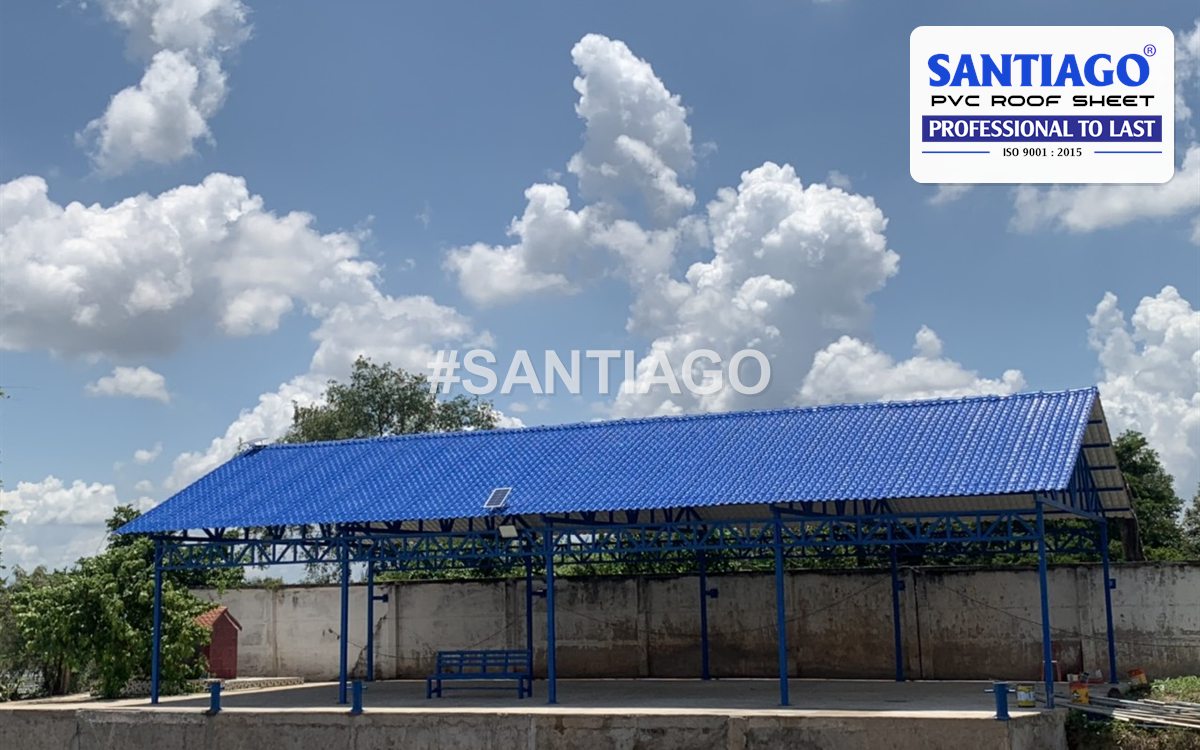
Open hall with a blue tile-sheet roof under a cloudy sky, Vietnam
When should a roof be checked?
Twice a year is a sensible rhythm: once before the rains or the storm season, while there is still time to fix things in dry weather, and once at the end of it. Add a check after every severe storm, strong wind or nearby tree fall. Roofs near the sea, under trees or next to busy roads collect dirt and debris faster and need more frequent attention.
What can I check from the ground?
Most roofing guides recommend starting at ground level, with binoculars if needed, rather than climbing up. Walk round the building and look for:
- Sheets or tiles that are missing, lifted, cracked or out of line
- Ridge, hip and verge pieces that have moved
- Flashing along walls and chimneys that has pulled away or has cracked sealant
- Gutters that sag, have separated joints or loose brackets
- Downpipes that are blocked, broken or discharge against the wall
- Branches touching or hanging over the roof
- Moss, leaves or debris collecting in valleys and behind chimneys
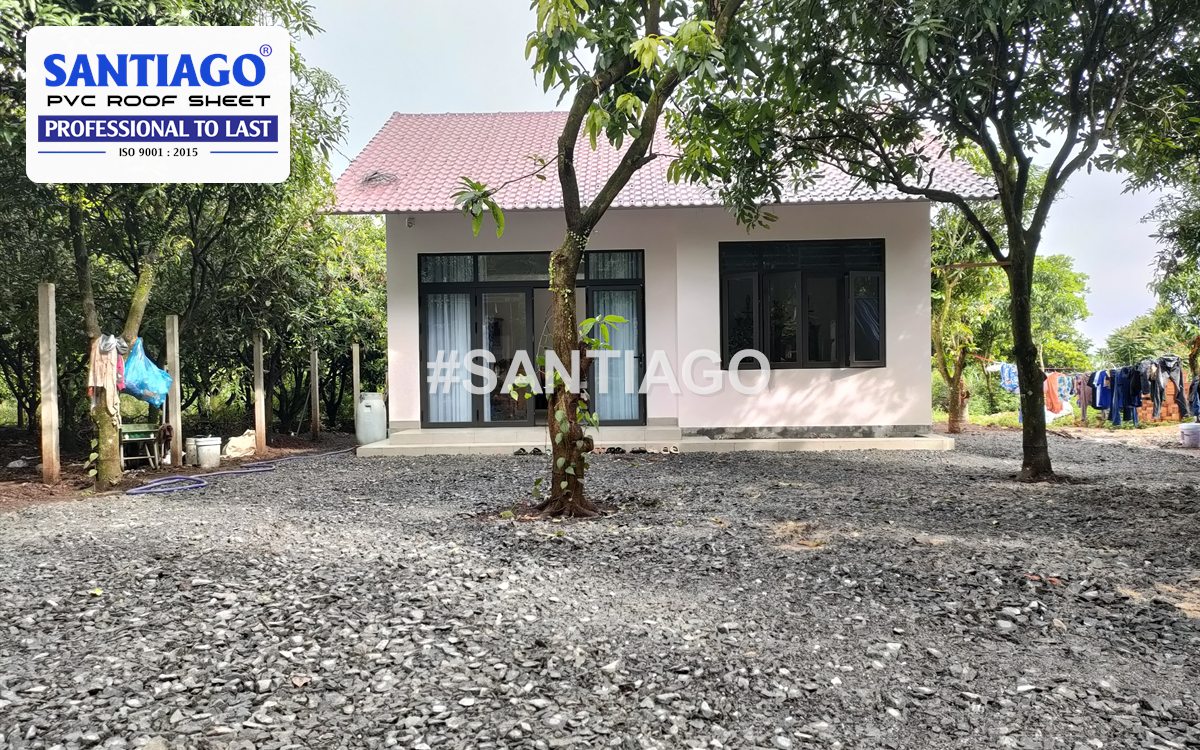
Single-storey house with a finished tile-sheet roof behind trees, Vietnam
What should be checked inside the building?
Leaks often show inside before they are visible outside. Look at ceilings and the tops of walls for stains, bubbling paint or mould, and notice musty smells. If there is a roof space, check it with a torch after rain for damp timber, wet insulation or drips at fixings. A stain far from where water seems to enter is common, because water runs along purlins and rafters before it drips.
How do I prepare gutters and drainage for the rainy season?
- Clear leaves and debris from gutters, outlets and valleys.
- Flush each downpipe with a hose and check the water comes out freely at the bottom.
- Tighten loose brackets and reseal leaking joints.
- Make sure water discharges to a drain or soakaway, away from walls and foundations.
- Fit leaf guards where trees overhang the roof.
- Check gutter size if water overflows in heavy rain; see how to size gutters and downpipes.
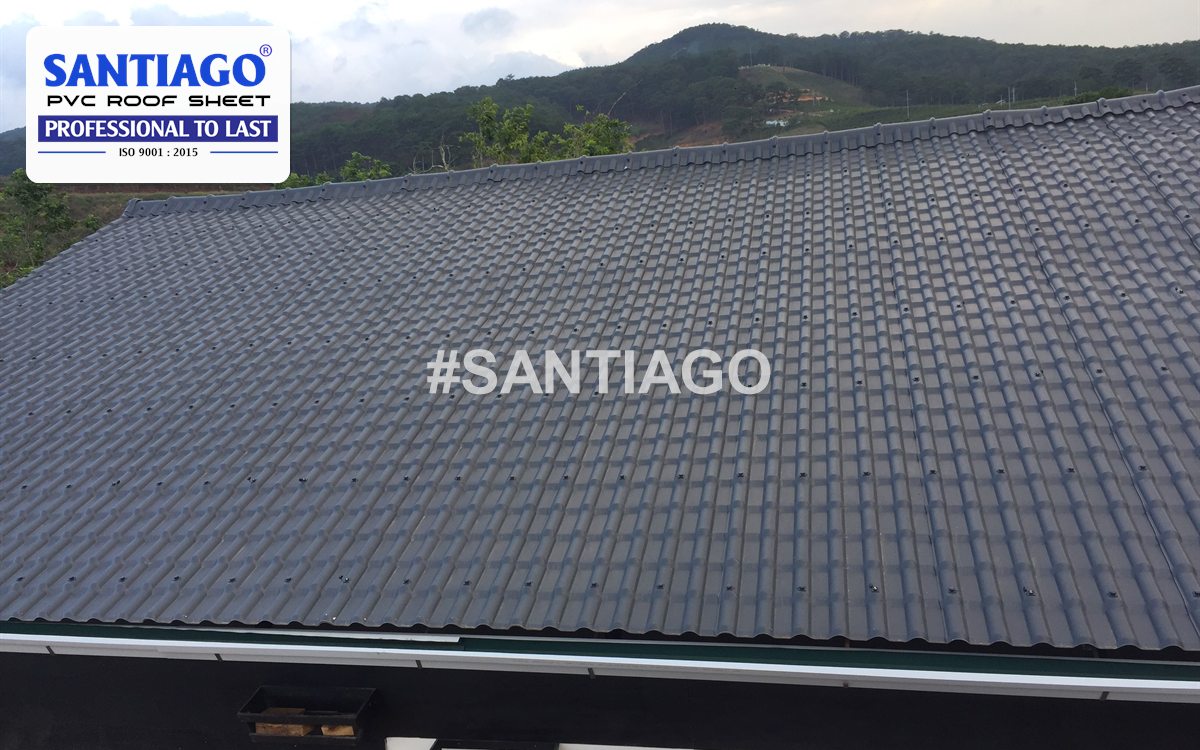
Eave of a dark grey tile-sheet roof with a gutter below, Vietnam
What should I do after a storm?
Safety first. Stay off the roof in wind and rain, keep away from fallen power lines and do not lean ladders on damaged gutters. Then:
- Photograph the roof, the yard and any damage inside, with the date, before anything is moved
- Cover openings temporarily, with a tarpaulin fixed by a professional if the damage is on the roof
- Keep receipts for emergency repairs and covers
- Contact your insurer early, as your policy may set a deadline for claims
- Have a roofer or your installer inspect the fixings, ridge pieces and flashing before the next storm
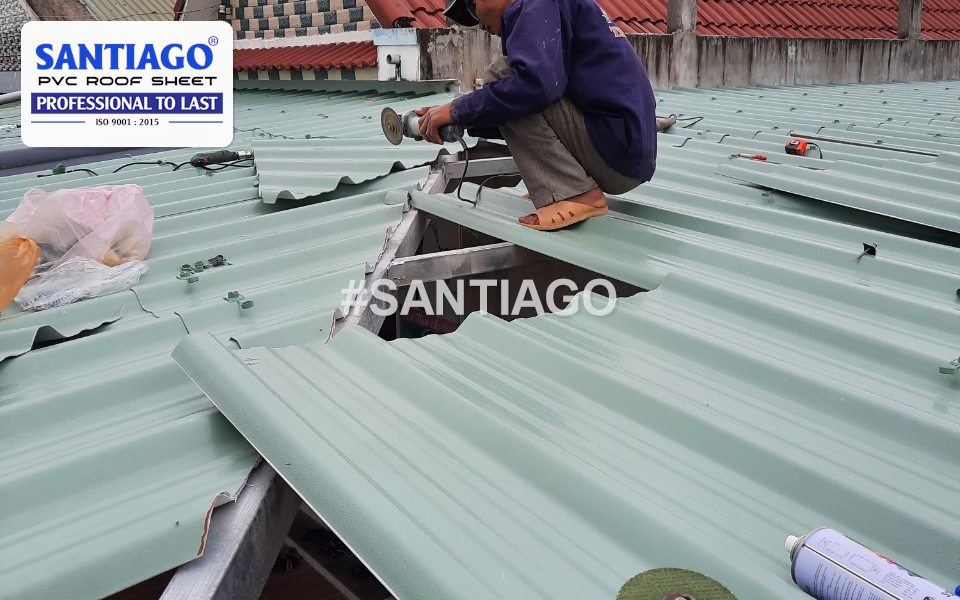
Installer working on a corrugated sheet roof next to a tiled roof, Vietnam
What is different on an ASA/PVC sheet roof?
There is no rust and no paint, so the checks are shorter than on a metal roof. Focus on these:
| Check | What to look for | What to do |
|---|---|---|
| ASA screw caps | A cap on every screw head | Replace missing caps so rain and salt stay off the screw |
| Screws | Screws through the top of the wave into a purlin, 70 mm, 4 – 5 sets per m² | Have an installer replace loose or missing screws in the same place, never in the valley |
| Ridge, hip and edge pieces | Pieces in line, fixings tight | Refit any piece that has moved |
| Laps | One wave side lap, sheets in line | Check after strong wind |
| Surface | Leaves, salt deposits, droppings | Rinse with fresh water; no solvents or paint needed |
The sheet is not a walking surface. Anyone who has to go on the roof should stand only over purlins on a board laid across at least two of them. Santiago supplies sheets and accessories and does not install; for work on the roof, call the installer who fitted it or a local roofer.
Santiago's 10-year warranty covers 2.5 mm and thicker sheets installed as Santiago recommends, so keep a note of the installation and any repairs.
How are tile sheets screwed down on site?
In under a minute the short goes from the Santiago factory floor to a grey tile-profile roof on site: some sheets already fixed, installers screwing down the rest, and a finished run next to the gutter.
Santiago uPVC tile roofs on site (Santiago video on YouTube).
More short videos on fixing
Two more English shorts from the Santiago YouTube channel. Each one is about a minute or less.
How does the sheet take a cut?
A 45-second factory short: beige and orange ASA/PVC sheets are flexed by hand and cut with shears to show how the material behaves. On a roof, purlins still go less than 700 mm apart.
Bending and cutting test on Santiago ASA/PVC sheets (Santiago video on YouTube).
What does a finished run near the gutter look like?
Mr Quyen stands among stacks of brown tile sheets in the Santiago factory, then walks with a colleague along a finished grey tile roof near the gutter while installers carry a sheet into place.
Santiago uPVC tile sheets from the factory to the roof (Santiago video on YouTube).
Santiago – a leading exporter of ASA/PVC roofing from Vietnam
Santiago roofing is produced and loaded into containers at our factory in Vietnam. It has been exported to India since 2023, Thailand since 2024 and the USA since 2025. Every export shipment comes with a commercial invoice, packing list, bill of lading and a certificate of origin (C/O) issued by Vietnam's Ministry of Industry and Trade, which importers use to claim the duty preference of their trade agreement.
| Item | Details |
|---|---|
| HS code | 3925.90.00 (ASA/PVC roofing sheets) |
| Certificate of origin | Form D (ASEAN), Form AI (India), Form AK / VK (Korea), Form AJ / VJ (Japan), Form VC (Chile), CPTPP proof of origin |
| Shipped from | Vietnam, by container |

Certificate of origin Form AI (ASEAN–India) for Santiago ASA/PVC roofing sheets, HS 39259000, certified on 24 September 2026. Buyer details are hidden.
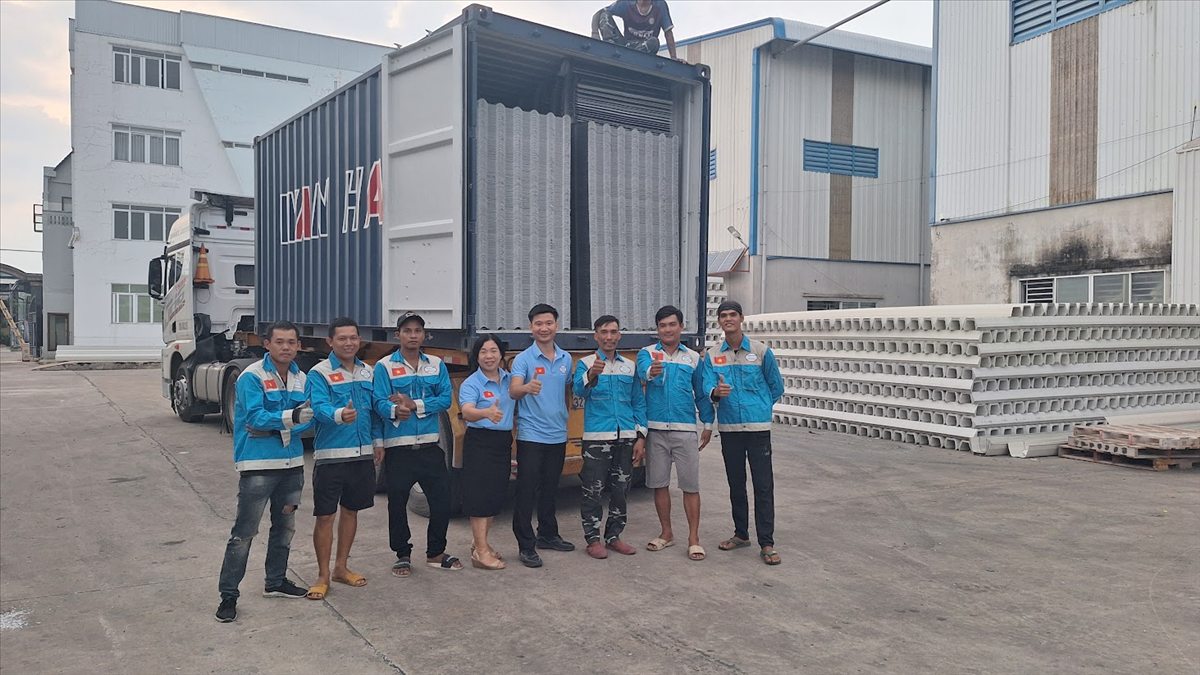
The Santiago team beside a loaded export container at the factory, November 2024
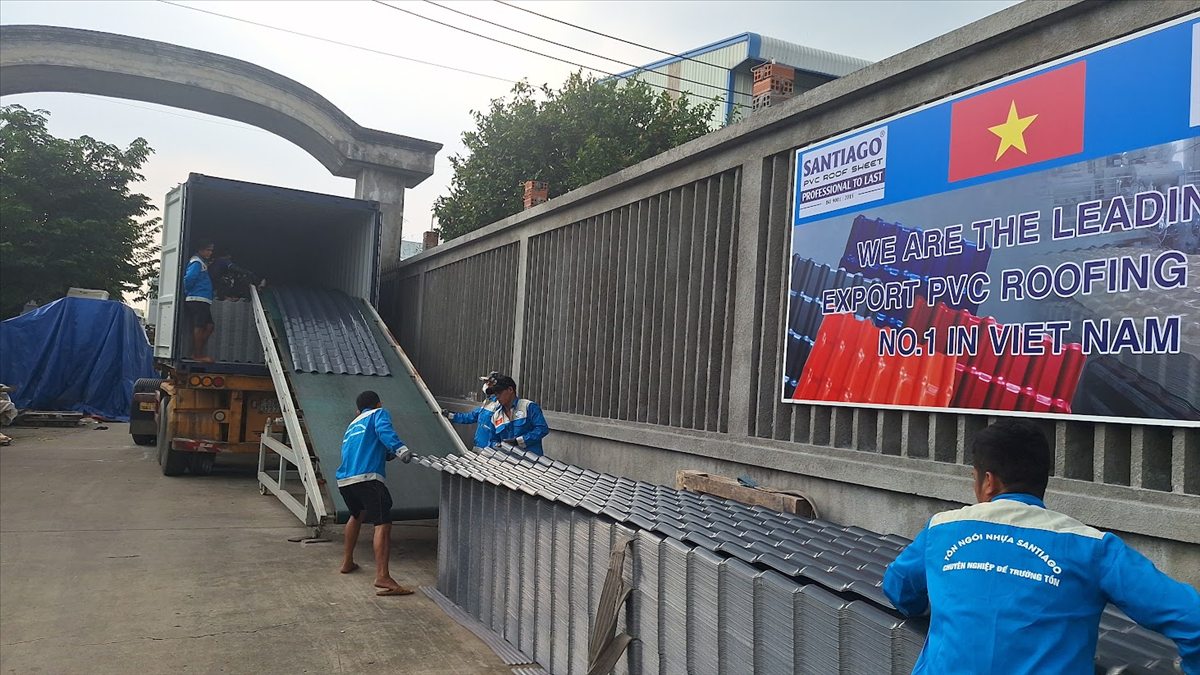
Loading Santiago roof tiles into an export container
Frequently asked questions
How often should a roof be inspected?
Twice a year, before and after the rainy or storm season, plus after any severe storm. Roofs under trees or near the sea need checks more often.
Can I inspect my roof myself?
From the ground, yes: use binoculars to look for missing or lifted sheets, moved ridge pieces, damaged flashing and blocked gutters. Leave work on the roof itself to a trained installer.
What should I do first after a storm damages my roof?
Keep everyone safe and off the roof, photograph the damage, arrange a temporary cover through a professional and contact your insurer early.
How do I stop gutters overflowing in heavy rain?
Clear leaves, flush the downpipes and fix sagging sections. If they still overflow, the gutters or outlets may be too small for the roof area.
Does an ASA/PVC roof need painting or rust treatment?
No. It contains no metal, so it does not rust, and the colour is in the ASA top layer. Rinse it with fresh water and replace any missing screw caps.
Read more
- How to seal a corrugated roof and stop leaks
- Screws and ASA caps: fixing guide
- Fixing ASA/PVC sheets for typhoons
- How to size gutters and downpipes
- ASA/PVC roof tile sheet
Read next on this topic
Main guide: How to Install PVC Roof Tile Sheets: 8 Steps
Sources for the figures in this article
- Profiles, 2.5–3.0 mm thickness and 10-year warranty: Santiago ASA/PVC product specification.
- HS code 3925.90.00: Harmonized System Chapter 39 (builders' ware of plastics), as applied in Vietnam's export tariff.
- Certificates of origin (Form D, AI, AK/VK, AJ/VJ, VC, CPTPP): issued by Vietnam's Ministry of Industry and Trade under the country's free trade agreements.
- Minimum order of one 40 ft container (about 5,000 m) and about 5 days for production and loading: Santiago export desk, October 2026.
Updated 03/11/2026. Santiago Import Export Co., Ltd, Vietnam. WhatsApp +84 935 391 495 (Mr. Quyen), hotline +84 965 437 316 (Mrs. Ly), email salessantiagoroofing@gmail.com.


