


Mr Quyen - Santiago. Posted 21/11/2026
A cool roof reflects more sunlight and sheds absorbed heat quickly, so its surface stays closer to air temperature. Measurements summarised by US researchers put a very dark roof about 60 °C above the air on a sunny day, against about 13 °C for a roof reflecting 80% of sunlight. Colour matters most, and the Solar Reflectance Index (SRI) puts a number on it.
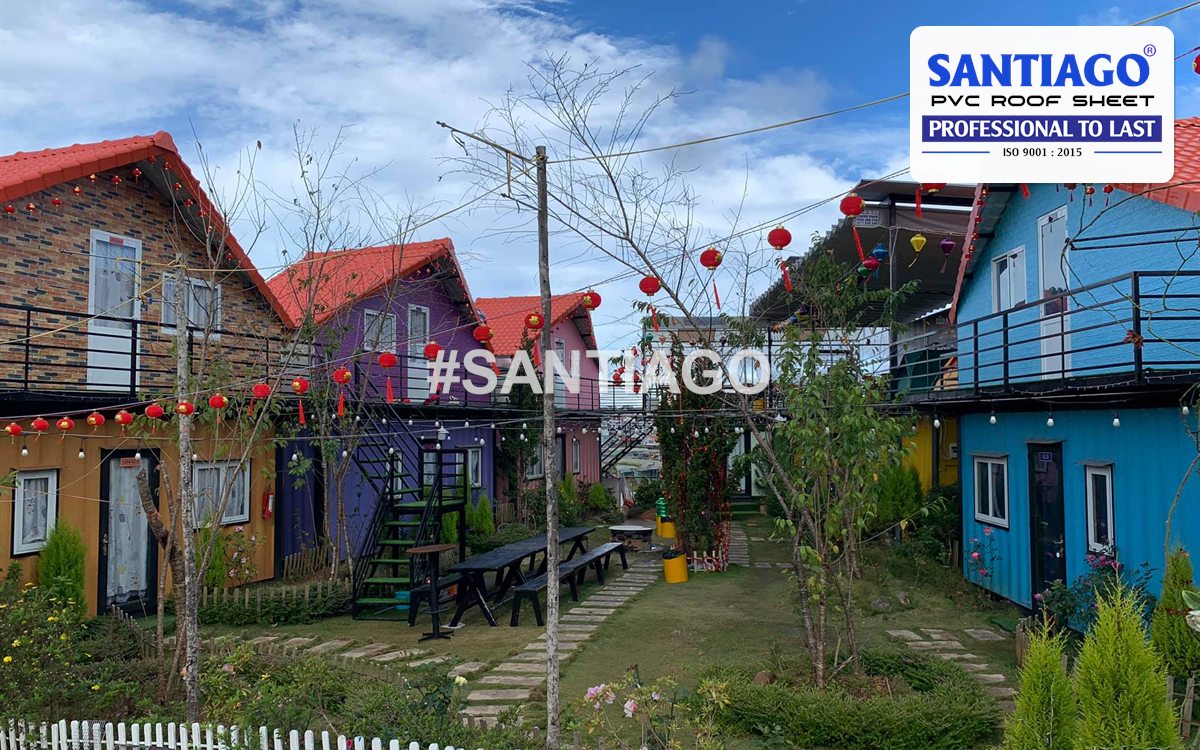
Row of colourful guesthouses with red tile-sheet roofs in a garden, Vietnam
What is a cool roof?
A cool roof is any roof surface that stays cooler in the sun than a conventional one. It does that in two ways. It reflects a large share of sunlight instead of absorbing it, which is called solar reflectance. And it gives off the heat it does absorb as infrared radiation, which is called thermal emittance. A white membrane, a light tile and a light-coloured sheet can all be cool roofs; a cool roof is a property of the surface, not a product type.
The heat a roof keeps out never reaches the ceiling or the roof space below. That cuts the load on fans and air conditioning and makes rooms under a bare roof, such as workshops, carports and verandas, more bearable in the afternoon.
How much cooler is a light roof than a dark one?
The gap is large. Work by Konopacki and Akbari at Lawrence Berkeley National Laboratory, as summarised in a later Arizona State University thesis, found that a dark roof with a solar reflectance of 0.05 can run about 60 °C hotter than the outdoor air in strong sun. A roof with a reflectance of 0.80 absorbs only about 20% of the sunlight and runs about 13 °C above the air.
| Roof surface | Solar reflectance | Surface above air temperature in strong sun |
|---|---|---|
| Very dark (black reference) | 0.05 | About 60 °C (108 °F) |
| Very light (white) | 0.80 | About 13 °C (23 °F) |
Real roofs sit between those two. Mid colours such as red, grey and blue fall in the middle, and the exact figure depends on the pigment, not only on how light the colour looks to the eye.
What is the Solar Reflectance Index (SRI)?
SRI combines reflectance and emittance into one number. The scale is fixed by two reference roofs: a standard black surface (reflectance 0.05, emittance 0.90) scores 0, and a standard white surface (reflectance 0.80, emittance 0.90) scores 100. Very reflective surfaces can score above 100.
The US Environmental Protection Agency's cool roof material gives examples that show how much pigment matters within one colour family:
| Example roof | SRI |
|---|---|
| White roof | 107 |
| Red tile made with cool pigments | 38 |
| Standard red tile | 6 |
A red roof does not have to be hot, but a standard red absorbs much more sunlight than a red made with infrared-reflective pigments. When a supplier quotes SRI or reflectance, ask whether the value is initial or after weathering. The Cool Roof Rating Council in the US lists both an initial and a three-year aged value, because dirt and weathering lower reflectance over time.
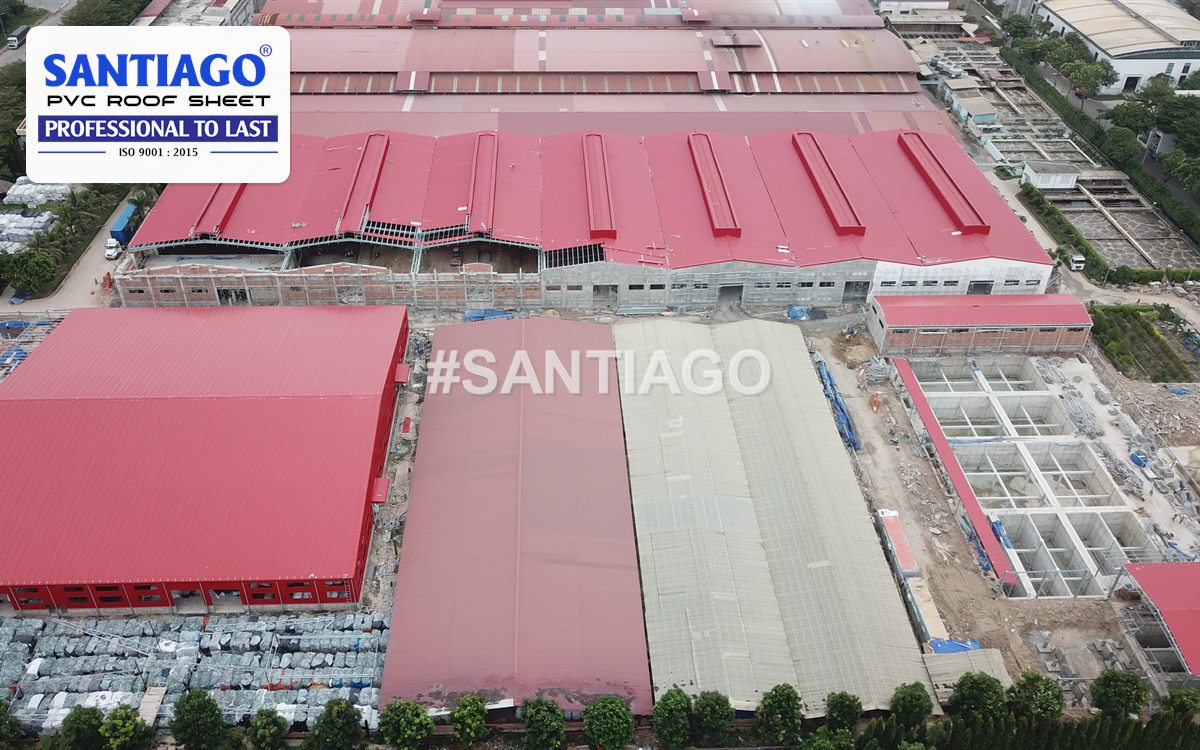
Aerial view of red and light-coloured factory roofs, Vietnam
Which roof colour is best for a hot climate?
For heat alone, the lighter the better. White and very light grey reflect the most sunlight. Most owners also want a roof that suits the house and hides dirt, so the practical choice is often the lightest colour they are happy to look at.
- White or cream: the most reflective; shows dust and algae sooner; a good fit for factories, warehouses and farm sheds where looks matter less
- Light grey: a good balance of heat and appearance
- Red, orange and blue: mid-range; the pigment decides how hot they run
- Dark grey, brown and chocolate: absorb the most; better where looks come first and the roof space is well ventilated and insulated
Colour is only one part of the answer. A cooler roof covering, a ventilated roof space and a ceiling or insulation all add up. We cover airflow in roof ventilation for hot, humid climates.
Are there downsides to a cool roof?
- In cold climates a cool roof gains less free heat in winter, so the benefit is smaller or can reverse; in the tropics this matters little
- Light roofs show dirt, and dirty roofs reflect less, so rinsing now and then keeps the effect
- Bright white can cause glare for neighbours and upper floors
- Some planning rules and housing estates set roof colours; check before you order
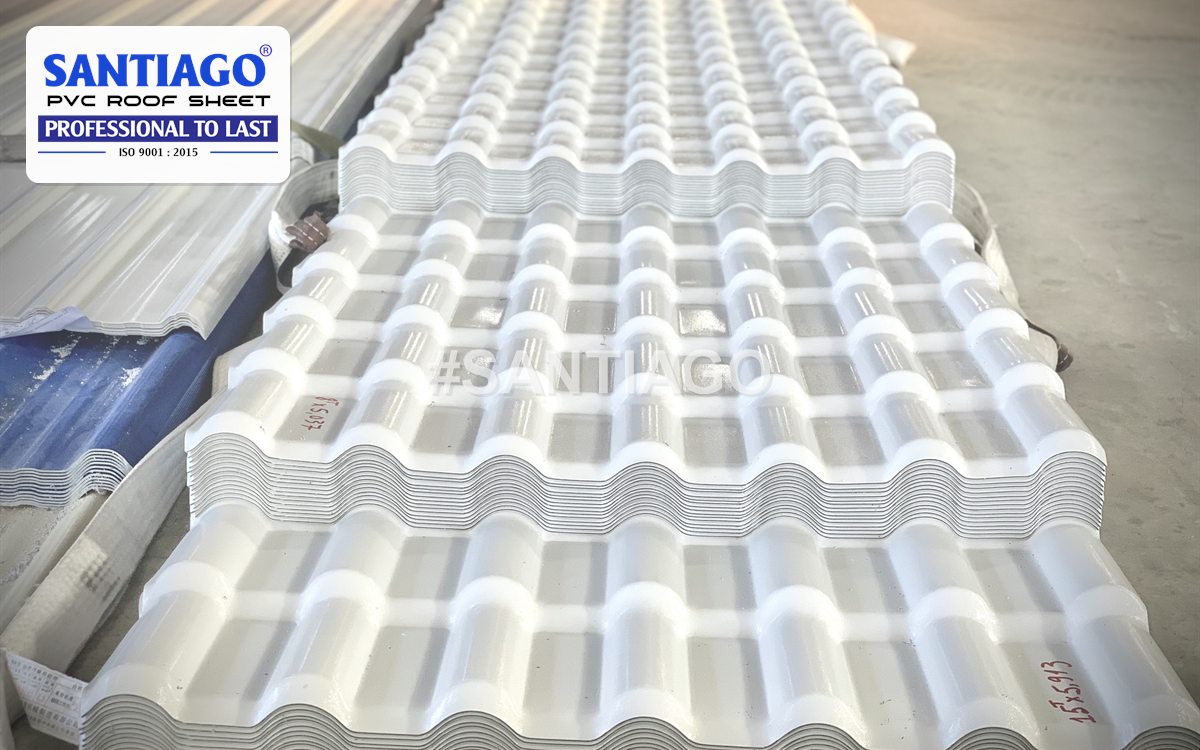
Stack of white tile-profile sheets, Vietnam
What does this mean for ASA/PVC roofing?
Santiago's sheets have an ASA top layer that carries the colour. It showed no colour change after 2,000 hours of artificial UV, and the colour is rated for 30 years, so a light roof stays light instead of chalking and darkening. Santiago's tests show 6 – 8 °C lower temperature under the roof than under bare metal sheet.
Santiago has not measured solar reflectance or SRI for its colours, so it gives no SRI figures and makes no cool-roof claim. Standard colours are dark grey, red, blue, orange and chocolate; white and other colours are made to order. If heat is the priority, choose the lightest colour that suits the building and ask for a physical sample to see in daylight.
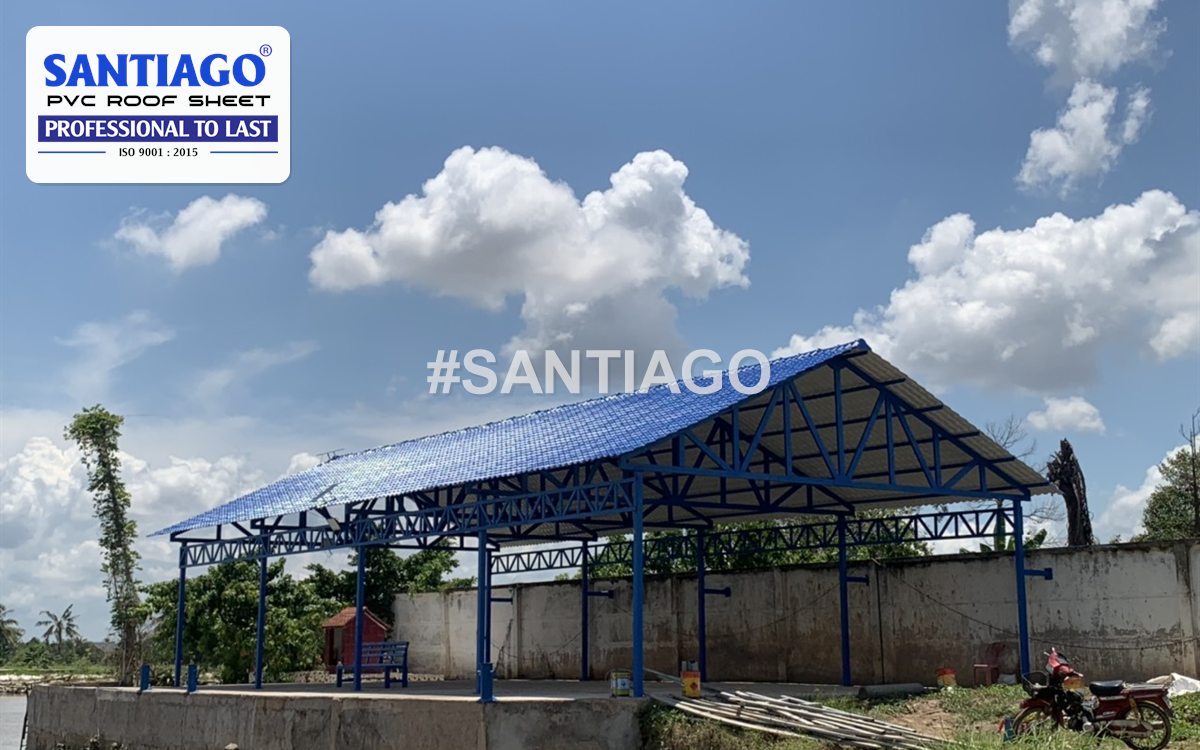
Open steel-frame hall with a blue tile-sheet roof, Vietnam
How do red, blue and navy roofs look on real buildings?
Filmed from a drone in Da Nang, Vietnam: a restaurant roofed with red Santiago ASA/PVC tile sheets, red, blue and navy samples on a wooden shelf, and a house with a blue tile roof. Mr Quyen presents it in English.
A restaurant roof in Da Nang with Santiago ASA/PVC tile sheets (Santiago video on YouTube).
More short videos on roof colours
Two more English shorts from the Santiago YouTube channel. Each one is about a minute or less.
Red, blue and grey roofs in real conditions
The short follows Santiago sheets from real roofs back to the factory: red tile sheets on a house, a quick flame test on the stack, a blue warehouse roof being fitted and grey sheets on the roller line.
Santiago PVC roofing tiles in real conditions (Santiago video on YouTube).
What do white, red and blue sheets look like side by side?
A Santiago worker stands on a white tile sheet on the factory floor and a gas torch is pointed at red and blue sheets beside it. The short ends with the team in front of an export container.
Santiago tile sheets at the factory (Santiago video on YouTube).
Santiago – a leading exporter of ASA/PVC roofing from Vietnam
Santiago roofing is produced and loaded into containers at our factory in Vietnam. It has been exported to India since 2023, Thailand since 2024 and the USA since 2025. Every export shipment comes with a commercial invoice, packing list, bill of lading and a certificate of origin (C/O) issued by Vietnam's Ministry of Industry and Trade, which importers use to claim the duty preference of their trade agreement.
| Item | Details |
|---|---|
| HS code | 3925.90.00 (ASA/PVC roofing sheets) |
| Certificate of origin | Form D (ASEAN), Form AI (India), Form AK / VK (Korea), Form AJ / VJ (Japan), Form VC (Chile), CPTPP proof of origin |
| Shipped from | Vietnam, by container |

Certificate of origin Form AI (ASEAN–India) for Santiago ASA/PVC roofing sheets, HS 39259000, certified on 24 September 2026. Buyer details are hidden.
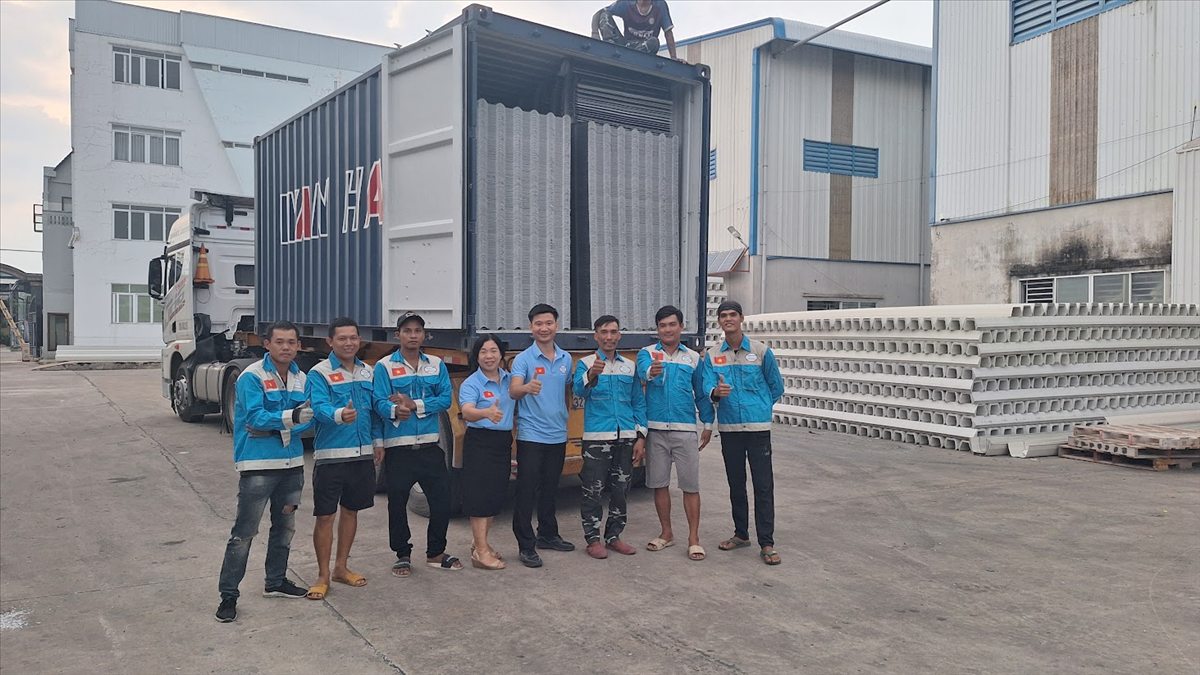
The Santiago team beside a loaded export container at the factory, November 2024
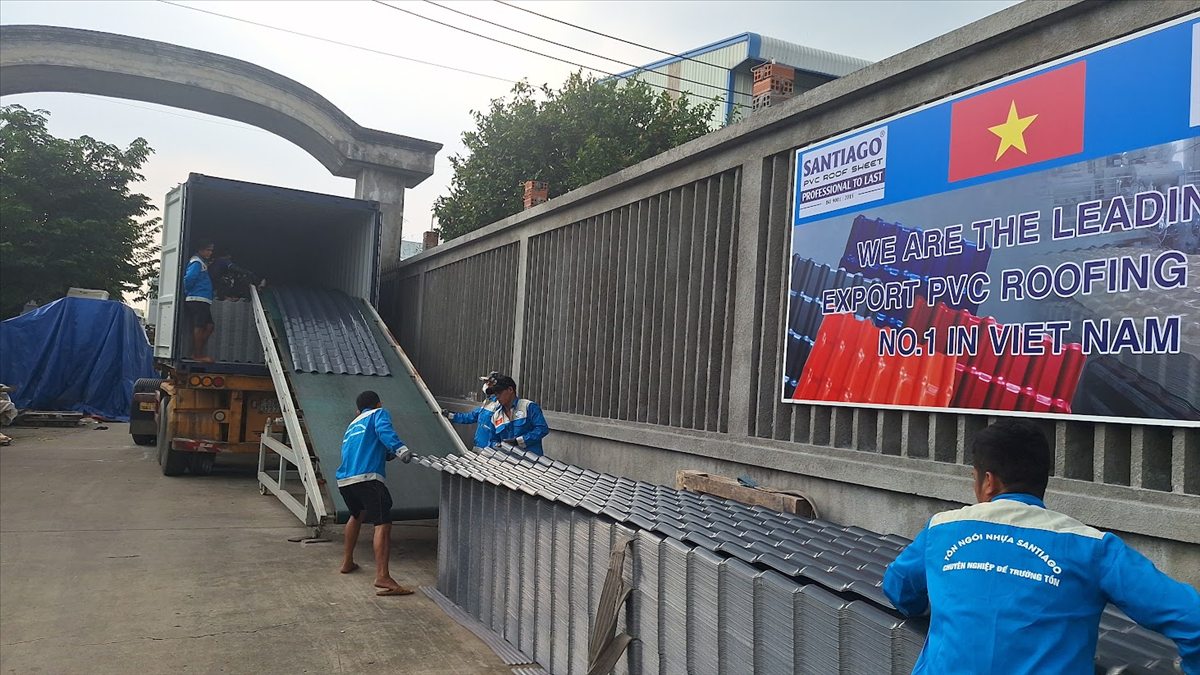
Loading Santiago roof tiles into an export container
Frequently asked questions
What colour roof is coolest?
White and very light colours reflect the most sunlight and stay coolest. Among darker colours, those made with infrared-reflective pigments run cooler than standard pigments of the same colour.
What does SRI mean for a roof?
The Solar Reflectance Index rates how cool a roof surface stays in the sun. A standard black surface scores 0 and a standard white one 100; higher numbers mean a cooler roof.
How much hotter is a dark roof than a white roof?
Measurements summarised by US researchers put a very dark roof about 60 °C above the air in strong sun, against about 13 °C for a roof reflecting 80% of sunlight.
Does a cool roof work in every climate?
It helps most in hot, sunny places. In cold climates it gains less heat in winter, so the yearly benefit is smaller.
Do Santiago's roof sheets have an SRI rating?
No. Santiago has not measured SRI or solar reflectance for its colours. Its tests show 6 – 8 °C lower temperature under the roof than under bare metal sheet, and the ASA top layer keeps the colour from fading.
Read more
- Roofing sheet colour combination for houses
- Heat resistant roofing sheet for a hot climate
- Why the ASA surface layer matters
- Roof ventilation in hot, humid climates
- ASA/PVC roof tile sheet
Read next on this topic
Main guide: Heat Resistant Roofing Sheet for a Hot Climate
Sources for the figures in this article
- Profiles, 2.5–3.0 mm thickness and 10-year warranty: Santiago ASA/PVC product specification.
- About 6–8 °C cooler than bare metal sheet and about 80% less rain noise: Santiago's own comparisons on finished roofs in Vietnam.
- HS code 3925.90.00: Harmonized System Chapter 39 (builders' ware of plastics), as applied in Vietnam's export tariff.
- Certificates of origin (Form D, AI, AK/VK, AJ/VJ, VC, CPTPP): issued by Vietnam's Ministry of Industry and Trade under the country's free trade agreements.
- Minimum order of one 40 ft container (about 5,000 m) and about 5 days for production and loading: Santiago export desk, October 2026.
Updated 03/11/2026. Santiago Import Export Co., Ltd, Vietnam. WhatsApp +84 935 391 495 (Mr. Quyen), hotline +84 965 437 316 (Mrs. Ly), email salessantiagoroofing@gmail.com.


