


Mr Quyen - Santiago. Posted 14/11/2026
For a hot climate, choose a roof sheet that passes heat slowly and keeps its surface in strong sun. Santiago's ASA/PVC sheets keep the space below about 6 – 8 °C (11 – 14 °F) cooler than bare metal sheet, and the ASA top layer showed no colour change after 2,000 hours of artificial UV. Colour, ventilation and a ceiling decide the rest.
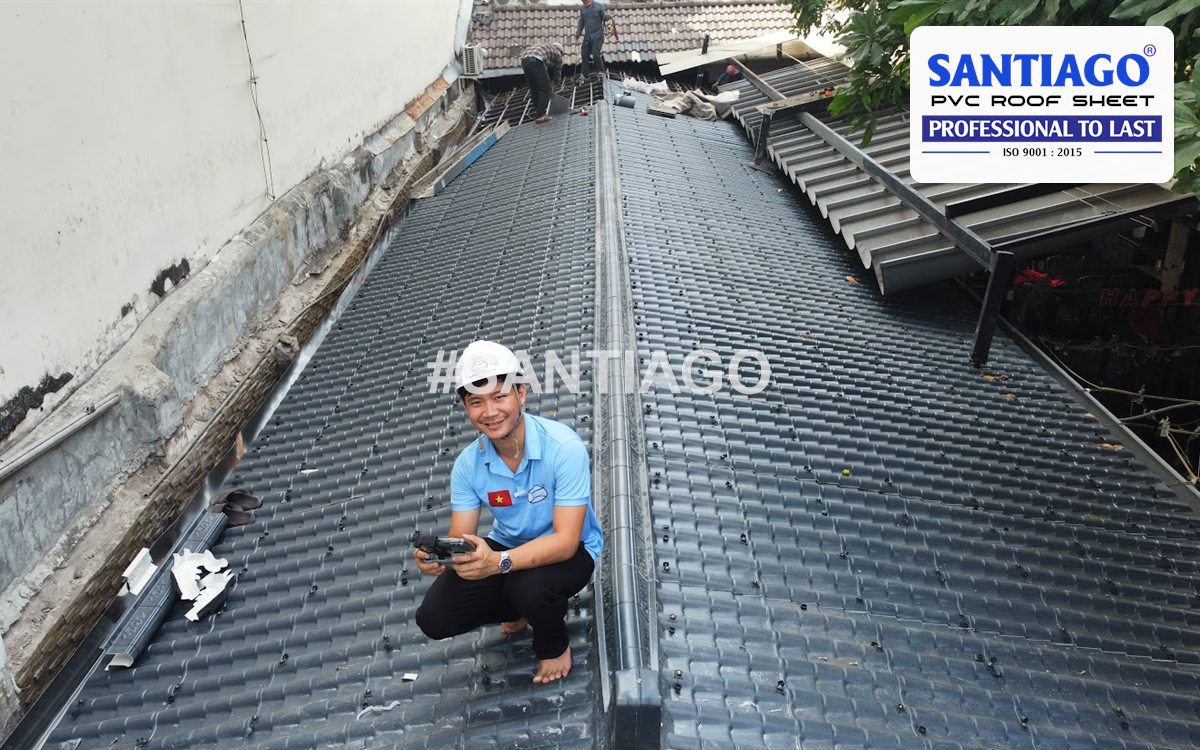
An installer working on a grey tile-sheet roof in bright sun, Vietnam
What does "heat resistant roofing sheet" actually mean?
People use the phrase for two different things. Some mean a sheet that keeps heat out, so the room underneath stays cooler. Others mean a sheet that can sit in hard sun for years without fading, cracking or warping. A roof in a hot country has to do both, and each one is checked in a different way.
| Question | What to look for | Santiago ASA/PVC sheet |
|---|---|---|
| Does it keep heat out? | How quickly heat passes from the sunny face to the room | About 6 – 8 °C cooler below than bare metal sheet (Santiago test) |
| Does it survive the sun? | A UV-blocking top layer and test data on colour | ASA top layer; no colour change after 2,000 hours of artificial UV; colour rated 30 years |
| Can it move with the heat? | Fixing details that allow expansion | 6 mm pre-drilled holes so the sheet can move around each screw |
| How long will it last? | Real service life and warranty terms | 25 – 30 years in use; 10-year warranty from 2.5 mm when installed as Santiago recommends |
Why does a bare metal roof get so hot?
Thin metal heats up fast in the sun and hands that heat straight to the air below it. Under a bare sheet with no ceiling, the room takes the full load by mid-morning and stays warm into the evening, because hot air collects under the ridge with nowhere to go. A plastic sheet conducts heat poorly, so much less of the surface heat reaches the room. That is the source of the 6 – 8 °C difference in Santiago's comparison with bare metal sheet.
Rain noise follows the same pattern: thin metal drums, while a 2.5 – 3.0 mm ASA/PVC sheet cuts rain noise by about 80% compared with metal. In a hot, wet climate you usually feel both problems under the same roof.
Is PVC roofing heat resistant in strong sun?
The top layer is the part that faces the sun every day, so that is where to look first. Santiago's sheets are co-extruded in four layers with no glue between them: ASA on top, then virgin PVC, a PVC core and a milky-white PVC base. The ASA layer blocks UV. In Santiago's test it showed no colour change after 2,000 hours of artificial UV, the colour is rated for 30 years, and sheets in real use last 25 – 30 years.
Heat also makes plastic expand, and the fixing has to allow for that. Installers pre-drill 6 mm holes, drive 70 mm screws only through the top of the wave over a purlin, cap each screw, and keep purlins less than 700 mm (about 27.5 in) apart: 440 or 660 mm (17.3 or 26 in) for the tile sheet. A sheet that is screwed tight in a small hole, or spans too far between purlins, can ripple or leak after a hot season.
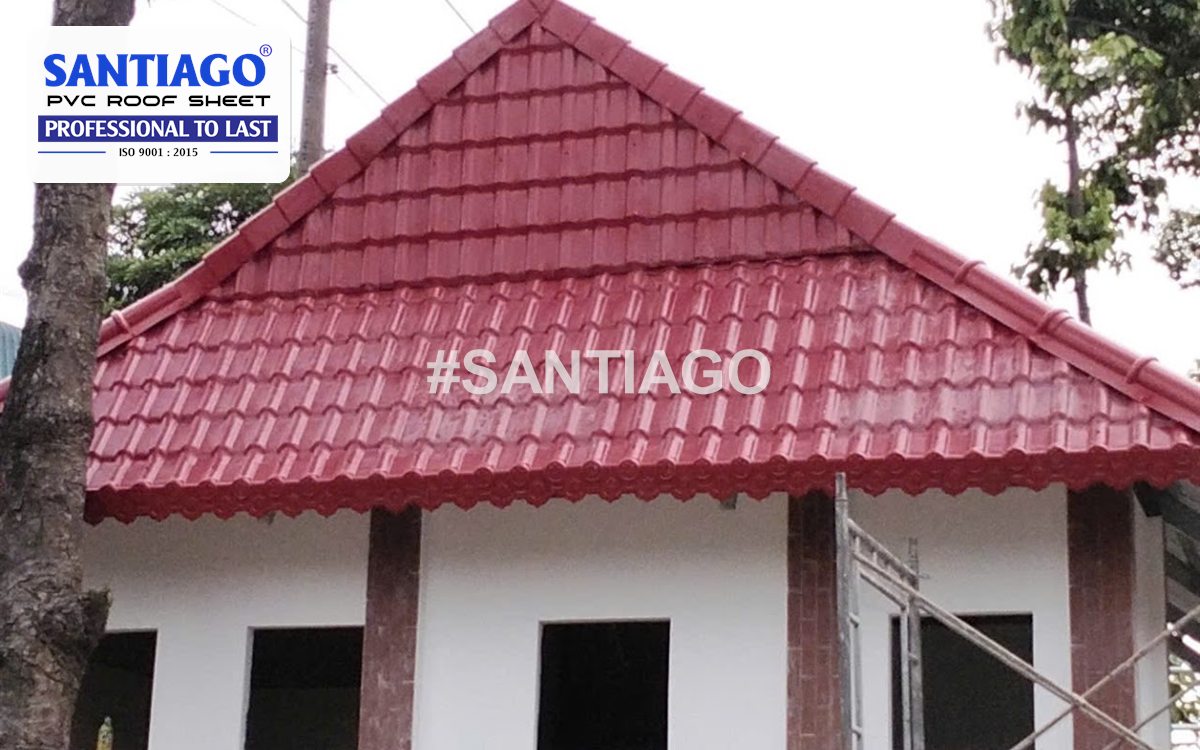
A white house with a red tile-sheet roof, Vietnam
Which roof sheet is best for a hot climate?
No single sheet suits every building, but the same few factors decide it in Nigeria, India, the Gulf, the Philippines or northern Australia. Look at all of them before you choose.
| Factor | Why it matters in the heat | What to do |
|---|---|---|
| Sheet material | Metal passes heat quickly; plastic passes it slowly | Under rooms people use all day, choose a sheet that conducts heat poorly |
| Colour | Light colours reflect more sunlight than dark ones | Pick the lightest colour that suits the building; judge it from a sample in daylight |
| Ventilation | Hot air collects under the ridge | Give it a way out at the ridge or gables, as your builder designs it |
| Ceiling or insulation | A second layer slows heat further | Ask your builder what suits the building; Santiago does not supply insulation |
| Slope | Water and dust sit on flat roofs | Lay ASA/PVC sheet at 20 – 45 % (about 2.4 to 5.4 in 12) |
The standard colours are dark grey, red, blue, orange and chocolate. White, green and purple are made to order and take a few extra days. If heat is the main worry, a lighter colour helps; if the house needs dark grey, the difference between plastic and bare metal still applies.
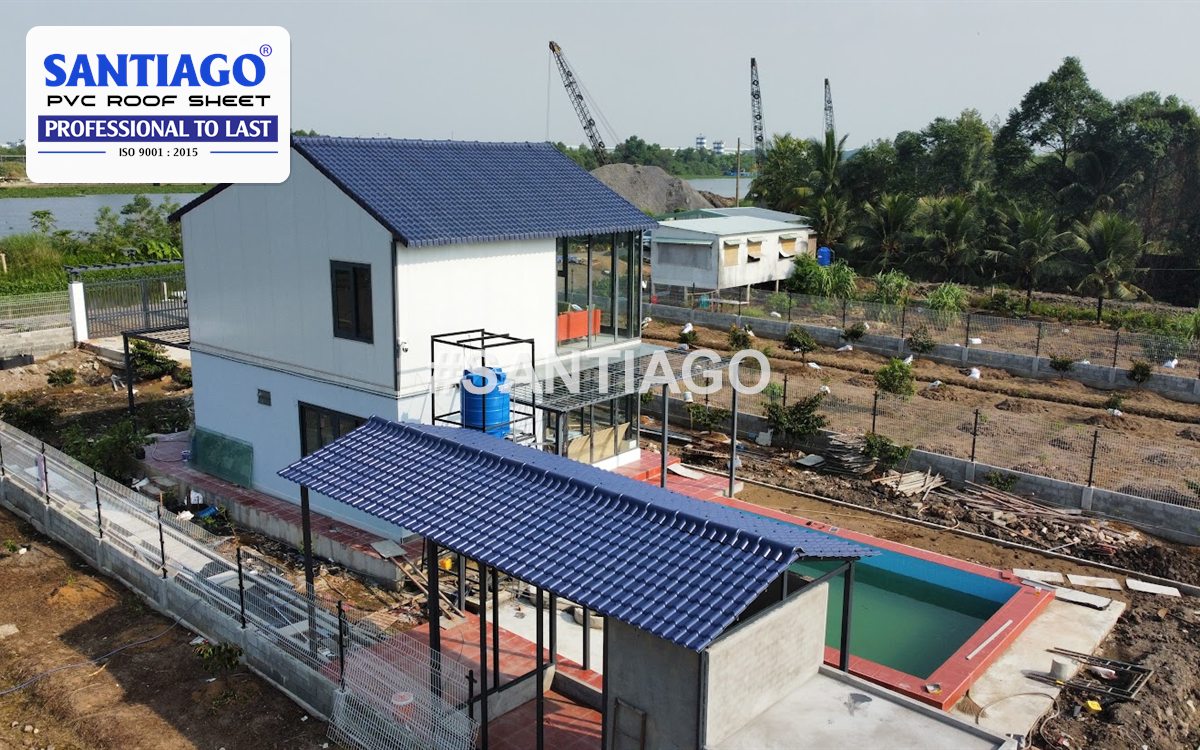
A house with a blue tile-sheet roof and a canopy beside a swimming pool, Vietnam
Where does a cooler roof sheet make the most difference?
- Single-storey houses with no ceiling, where the underside of the roof is the ceiling.
- Verandas, pool canopies and outdoor kitchens where people sit in the afternoon.
- Shops, workshops and small factories where staff work under the roof all day.
- Poultry and pig houses, where a metal roof also faces ammonia and rust.
- Open pavilions, cafés and restaurants with no walls to shade the space.
In a two-storey house with a full ceiling and insulation, the change in the bedrooms will be smaller, because the roof sheet is no longer the only layer between the sun and the room.
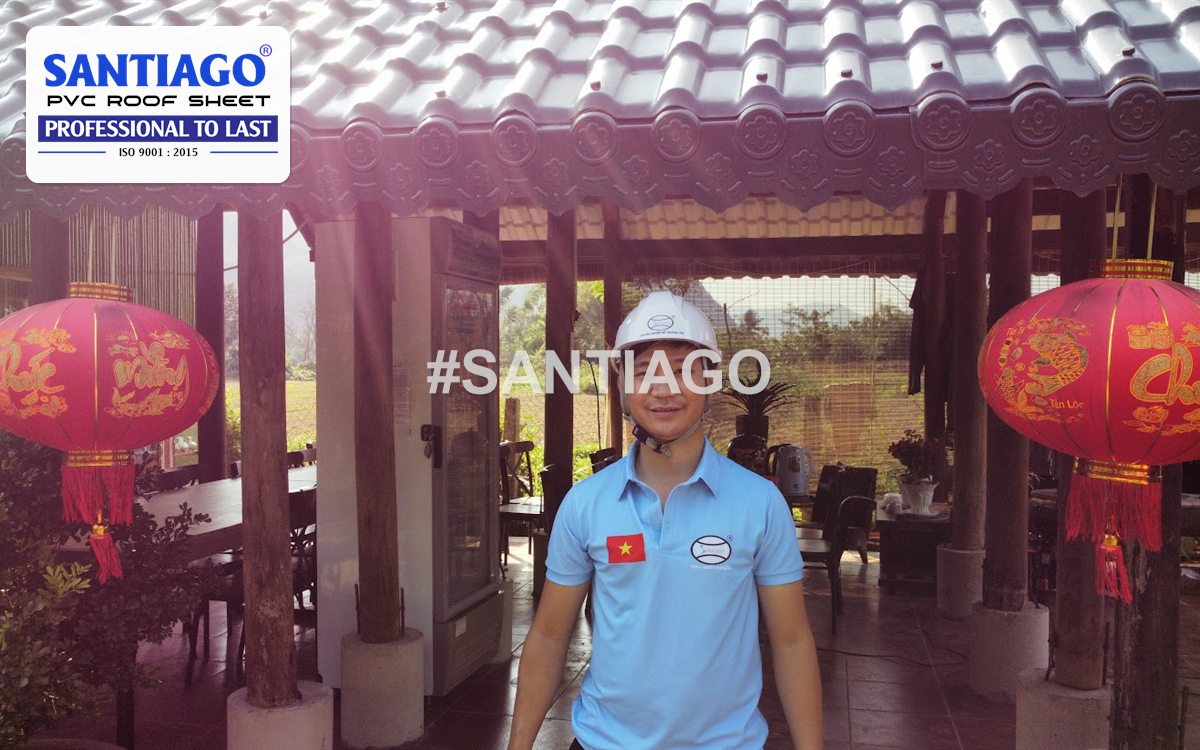
An open pavilion with hanging lanterns under a tile-sheet roof, Vietnam
What should I check before buying heat proof roofing sheets?
- Ask how the heat figure was measured and what it was compared with. Santiago compares its sheet with bare metal sheet.
- Ask for the layer structure and whether the top layer is ASA.
- Get a sample, leave it in full sun next to a metal offcut and touch both at midday.
- Measure the thickness at a cut edge: 2.5 mm is the minimum for a roof.
- Read what the warranty covers and which installation conditions it depends on.
- Check that the frame suits plastic sheet (purlins under 700 mm, slope 20 – 45 %) and have your builder or engineer confirm it under your local building code.
Santiago gives no structural, wind or fire rating for its sheets; those questions belong to your engineer and your local rules. Free samples are sent on request, and the buyer pays the courier.
Why does a bare metal roof feel so hot, and what changes with a tile sheet?
Mr Quyen holds a white tile sheet in the Santiago factory in Vietnam and explains in English, with captions, why bare metal roofs are hot, noisy in rain and costly to repair. The short then moves to a red tile roof on a house and a finished grey tile roof beside the gutter.
Heat and rain noise: Santiago ASA/uPVC roofing explained (Santiago video on YouTube).
More short videos on heat
Two more English shorts from the Santiago YouTube channel. Each one is about a minute or less.
How does the sheet react to strong heat?
The heat-test short: grey and red sheets under a flame, Mr Quyen on grey sheets at the factory, then a warehouse roof re-laid in blue. It shows how the sheet behaves under heat, not a certified fire rating.
Heat test and a warehouse re-roof with uPVC sheets (Santiago video on YouTube).
What does a finished tile roof look like in the sun?
In under a minute the short goes from the Santiago factory floor to a grey tile-profile roof on site: some sheets already fixed, installers screwing down the rest, and a finished run next to the gutter.
Santiago uPVC tile roofs on site (Santiago video on YouTube).
Santiago – a leading exporter of ASA/PVC roofing from Vietnam
Santiago roofing is produced and loaded into containers at our factory in Vietnam. It has been exported to India since 2023, Thailand since 2024 and the USA since 2025. Every export shipment comes with a commercial invoice, packing list, bill of lading and a certificate of origin (C/O) issued by Vietnam's Ministry of Industry and Trade, which importers use to claim the duty preference of their trade agreement.
| Item | Details |
|---|---|
| HS code | 3925.90.00 (ASA/PVC roofing sheets) |
| Certificate of origin | Form D (ASEAN), Form AI (India), Form AK / VK (Korea), Form AJ / VJ (Japan), Form VC (Chile), CPTPP proof of origin |
| Shipped from | Vietnam, by container |
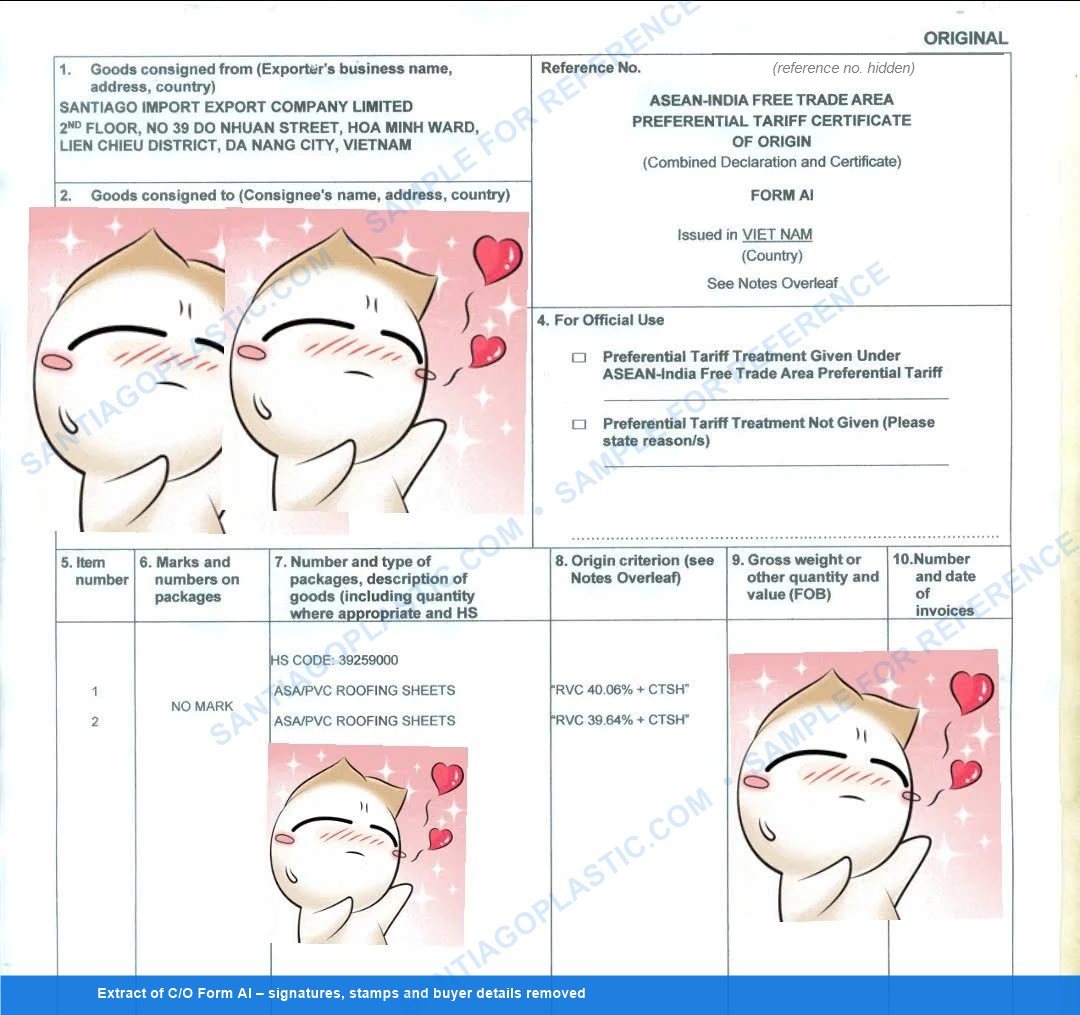
Certificate of origin Form AI (ASEAN–India) for Santiago ASA/PVC roofing sheets, HS 39259000, certified on 24 September 2026. Buyer details are hidden.
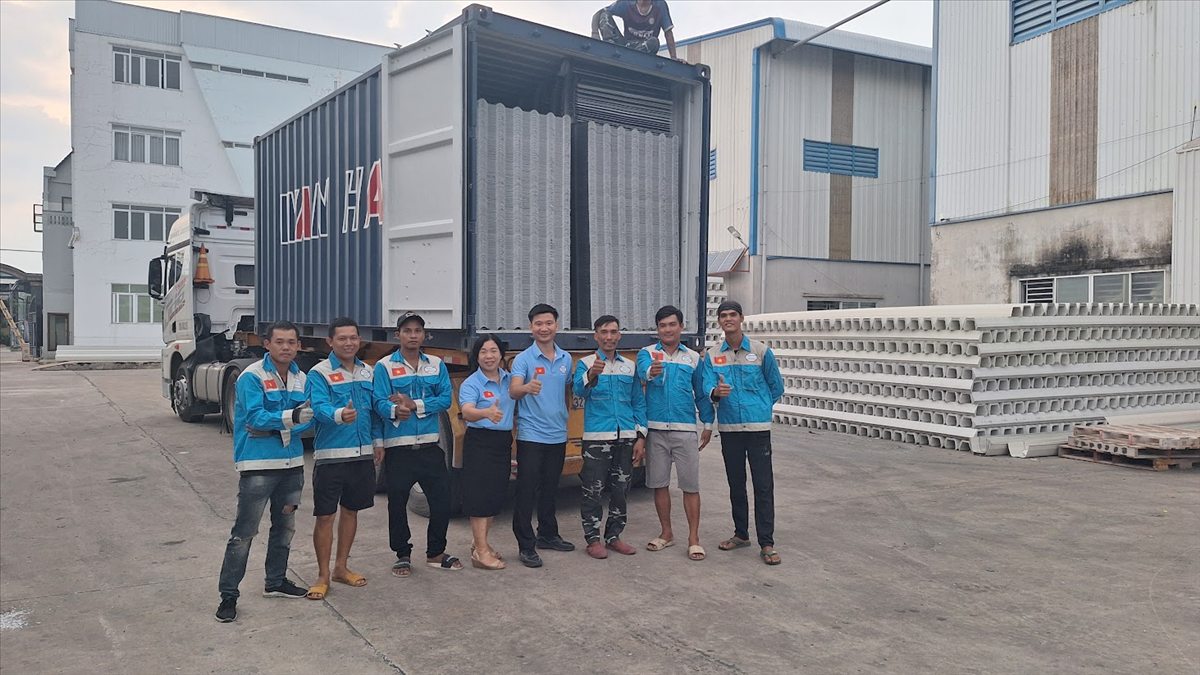
The Santiago team beside a loaded export container at the factory, November 2024
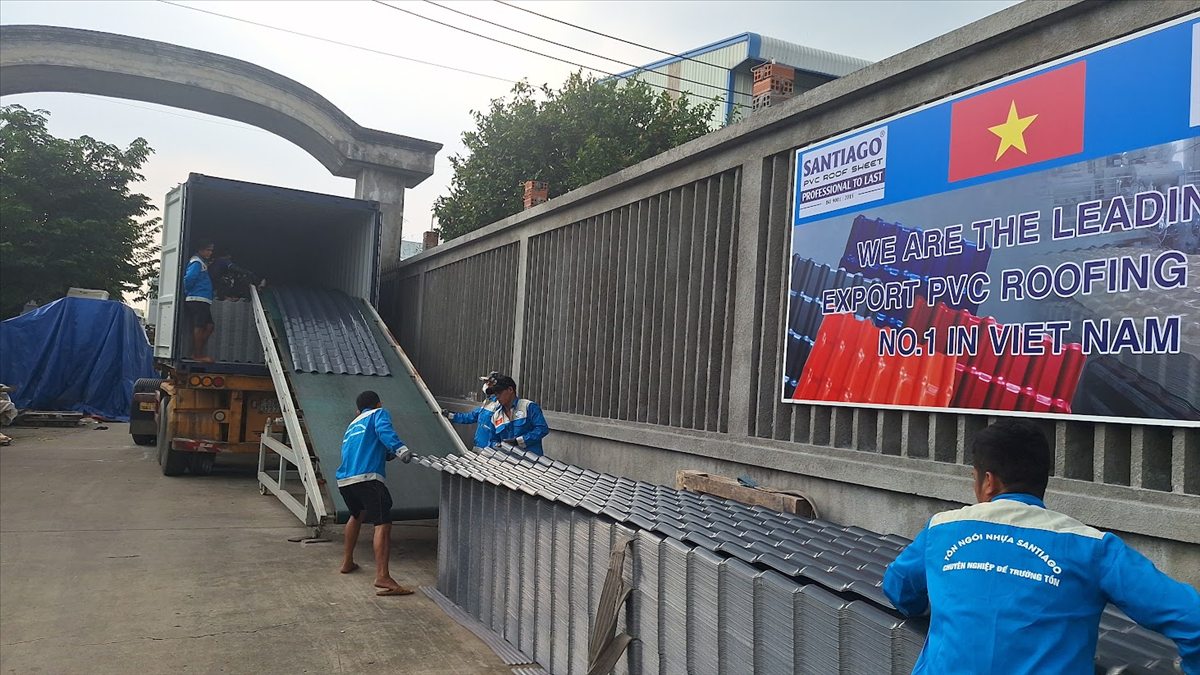
Loading Santiago roof tiles into an export container
Frequently asked questions
Which roofing sheet is best for a hot climate?
For rooms people use all day, a sheet that conducts heat poorly does better than bare metal. Santiago's ASA/PVC sheets keep the space below about 6 – 8 °C cooler than bare metal sheet; a light colour, ventilation and a ceiling add to that.
Is PVC roofing heat resistant?
A PVC sheet with an ASA top layer copes with strong sun: Santiago's showed no colour change after 2,000 hours of artificial UV, and the colour is rated for 30 years. Installers pre-drill 6 mm holes so the sheet can expand.
Do light-coloured roofing sheets keep a house cooler?
Light colours reflect more sunlight than dark ones, so they help. Santiago's standard colours are dark grey, red, blue, orange and chocolate; white is made to order.
Are heat proof roofing sheets also fireproof?
No, heat and fire are separate questions. Santiago gives no fire rating; ask any supplier for test reports to your local standard and follow your local fire code.
How thick should a heat resistant roofing sheet be?
At least 2.5 mm on a roof. Santiago makes 2.5 and 3.0 mm sheets, and the 10-year warranty applies from 2.5 mm.
Read more
- What Santiago's heat, noise and corrosion tests show
- Why the ASA surface layer matters
- A cooler, quieter house roof in the Philippines
- Keeping a house cool in the hot season in Laos
- ASA/PVC roof tile sheet
Read next on this topic
All articles in this topic: heat, rain noise and condensation.
- PVC Roofing Cameroon: Toiture PVC for Douala Rain
- Corrugated Roofing Sheets Anti Condensation Guide
- Noise Reduction Roofing: How to Stop Rain Noise
- Riverside House Roofing Brunei | Bumbung Rumah Tepi Air
- Roofing Sheet for Kerala Houses | റൂഫിംഗ് ഷീറ്റ്
- PVC Roof Sheet Underside: Can It Be the Ceiling?
- What Santiago's Heat, Noise and Corrosion Tests Show
- A Cooler, Quieter Filipino House Starts With the Roof
- Keeping a House Cool in the Lao Hot Season: Roof Choices
In other languages:
Sources for the figures in this article
- Profiles, 2.5–3.0 mm thickness and 10-year warranty: Santiago ASA/PVC product specification.
- About 6–8 °C cooler than bare metal sheet and about 80% less rain noise: Santiago's own comparisons on finished roofs in Vietnam.
- HS code 3925.90.00: Harmonized System Chapter 39 (builders' ware of plastics), as applied in Vietnam's export tariff.
- Certificates of origin (Form D, AI, AK/VK, AJ/VJ, VC, CPTPP): issued by Vietnam's Ministry of Industry and Trade under the country's free trade agreements.
- Minimum order of one 40 ft container (about 5,000 m) and about 5 days for production and loading: Santiago export desk, October 2026.
Updated 03/11/2026. Santiago Import Export Co., Ltd, Vietnam. WhatsApp +84 935 391 495 (Mr. Quyen), hotline +84 965 437 316 (Mrs. Ly), email salessantiagoroofing@gmail.com.


